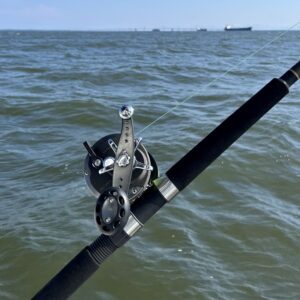
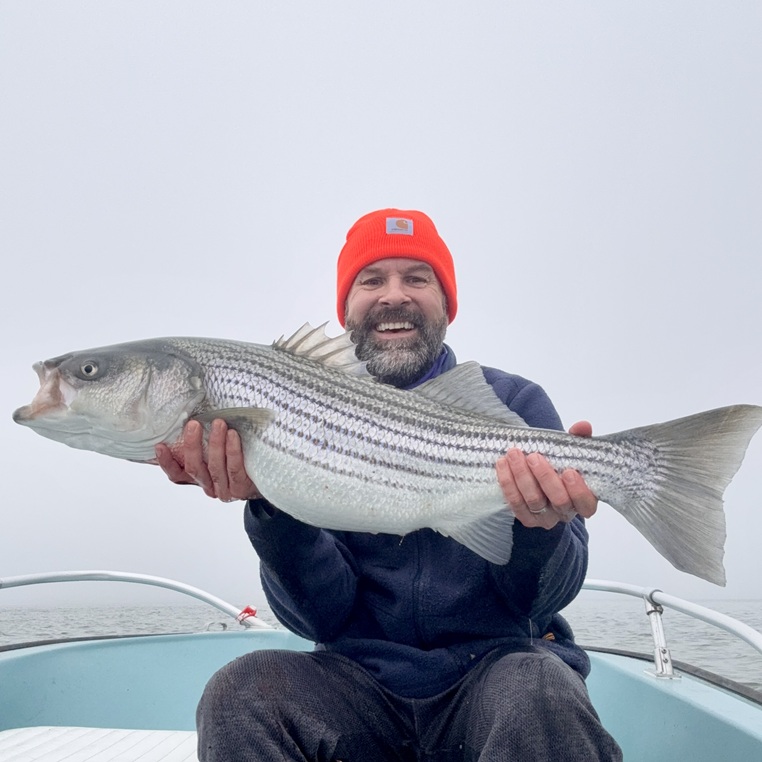
The spring catch-and-release season for striped bass is here. With a goal and plan to target big fish, we set out on Good Friday to find them near Annapolis.
I ventured out on an early, eerily calm Good Friday morning and accomplished a goal—catch and release big striped bass in Annapolis. For the first season in six years (since 2019), Maryland anglers may now target striped bass during the month of April—and the fish being targeted are the large, migratory bass visiting the Chesapeake Bay and its tributaries for their spring spawn. Because these bass represent the future of the species, utmost care must be taken when targeting, handling, and releasing these amazing fish.
From December through May, the largest of the striped bass species migrate into the Chesapeake Bay, with peak fishing in late-February through early May. Anglers and charter captains usually follow the migration from the southern Bay and up, with the bass swimming toward their spawning rivers (Potomac, Choptank, Susquehanna being primary waters). As the bass move north, they will pause to feed at the Bay’s channel edges and points of land/sandy flats that jut into the main stem. With this geography in mind, one can suppose where the bass are likely to be during angling windows of opportunity.
My window of opportunity was this past Friday morning, which happened to be just two days after a full moon. The weather was forecasted to be very calm, slight winds, and full cloud cover (even some fog). This would allow me to take my small, 14’ McKee Craft down to the Severn River’s mouth and possibly poke into the Bay itself (something I rarely, if ever, do with a craft of this size).
Matching satellite maps to nautical charts, I devised my plan, which boiled down to slowly cruising the depth transition zones around a couple major points between the mouth of the Severn and the Chesapeake Bay Bridge, while using sidescan sonar to locate fish. Then drift the boat and cast accordingly. When I say “cruising,” I specifically cut off my 50hp motor altogether and used the trolling motor exclusively at a slow 2mph. This allowed for a very stealthy approach.
I launched before sunrise at about 6:15 a.m. from Valentine Creek and rode a few miles down to the mouth of the Severn. From boat ramp to first location, I covered about nine miles. By 6:40ish, I was in position to begin sidescanning for fish, and moved methodically around the big point. I actually spotted two small clusters of large marks on the inside/west side of the point—possibly wolf packs of big fish—and tried jigging for them. The fish were not interested in this presentation or, perhaps, I did not effectively place the lure in their exact strike zone. The fish did appear to be on the move, though. The tide was still slack and about to turn.
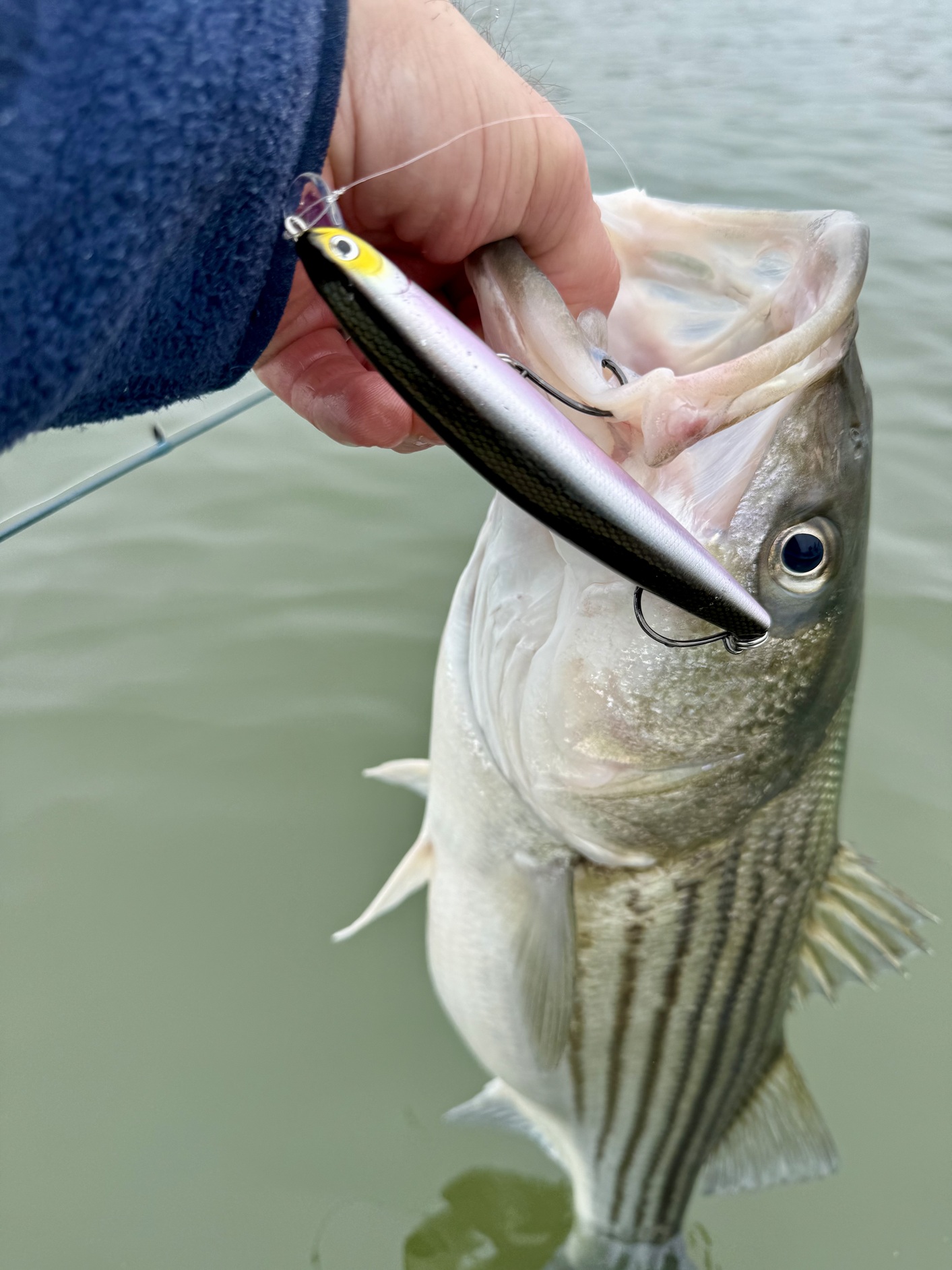
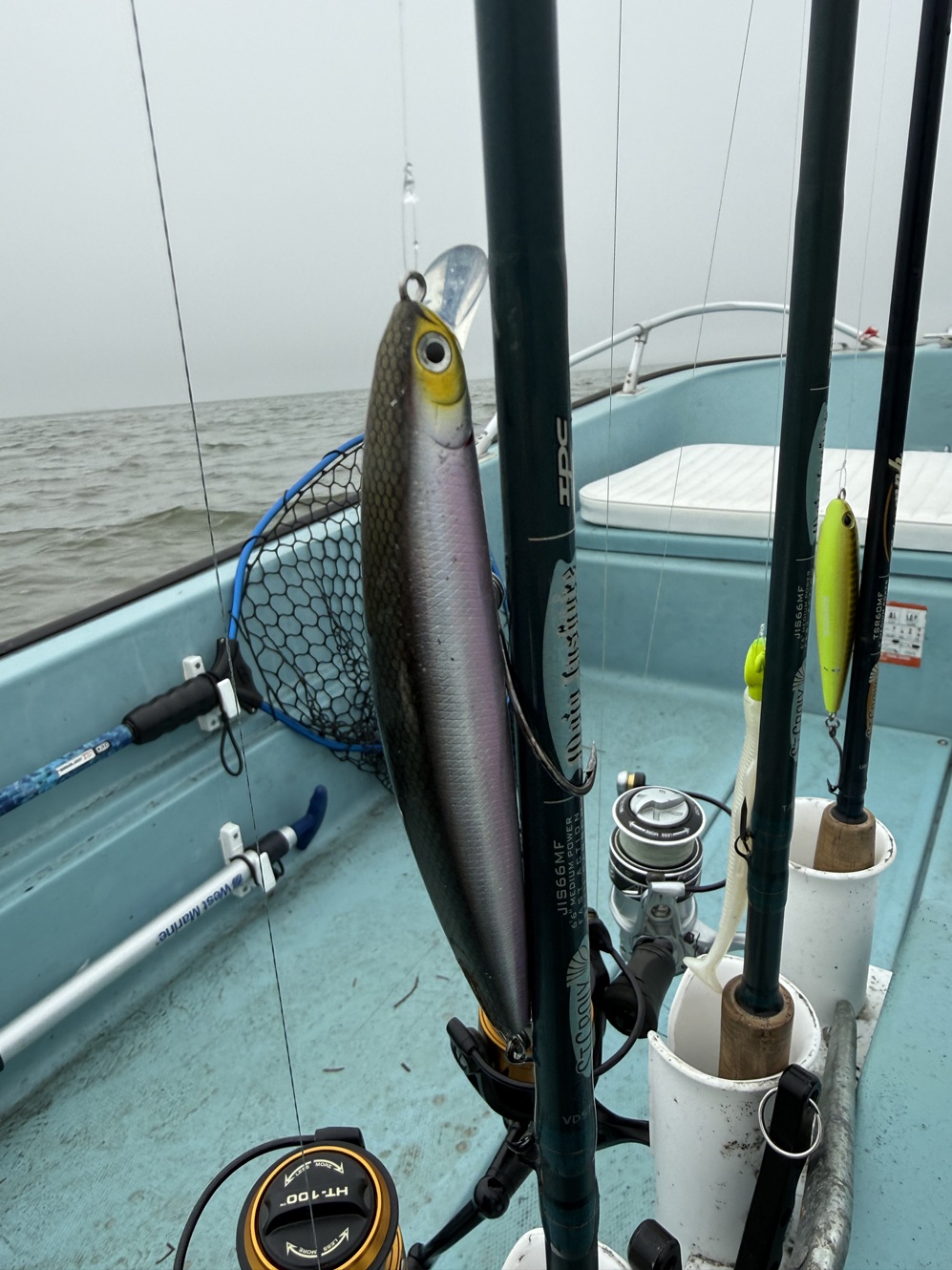
With calm water and little wind, I felt confident enough to motor into bigger water and northward to the second major location. I made a very careful and methodical voyage across a “bay within the Bay” to point No. 2 and began working my “cruising the shallows/transition” plan again. At about 9:30 a.m., I came upon a promising looking stretch of the shoal with a bit of bottom feature that stood out among the sandy flats. Within 6’ of water, I began marking a few fish. I cut the troll motor and began casting a shallow running minnow plug—the Daiwa Salt Pro. This lure measures about 5.5” long, has a silver sheen with black back, and mimics the smaller menhaden and similar forage that striped bass love (and yes, I swap out treble hooks and replace them with inline circle hooks).
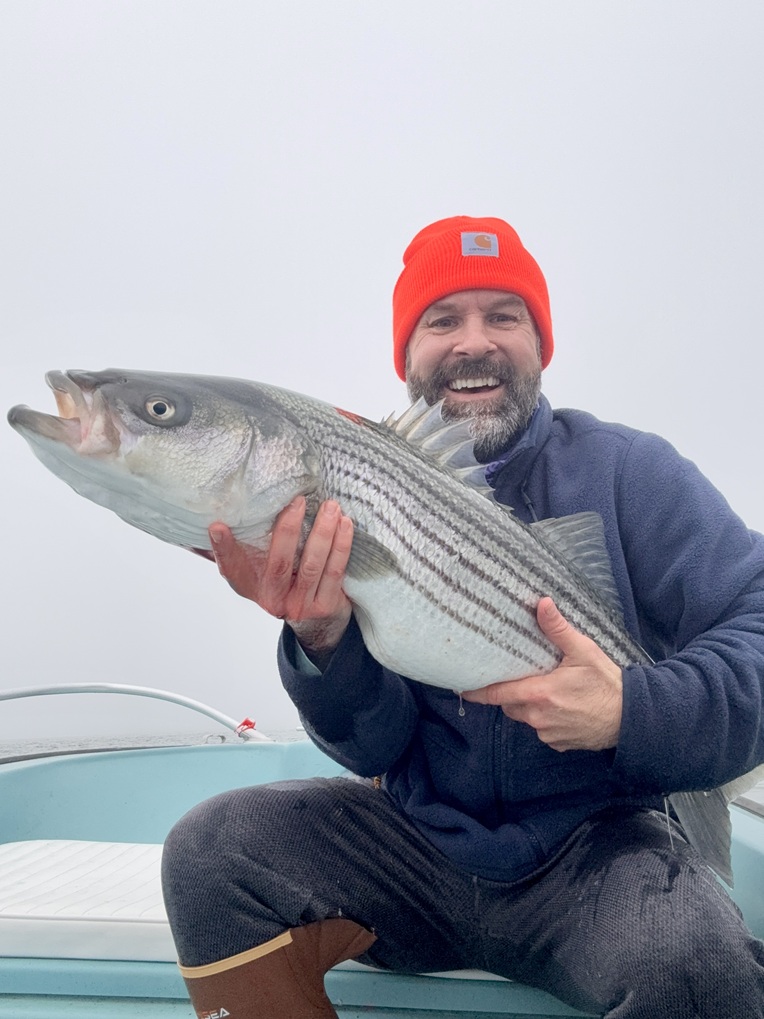
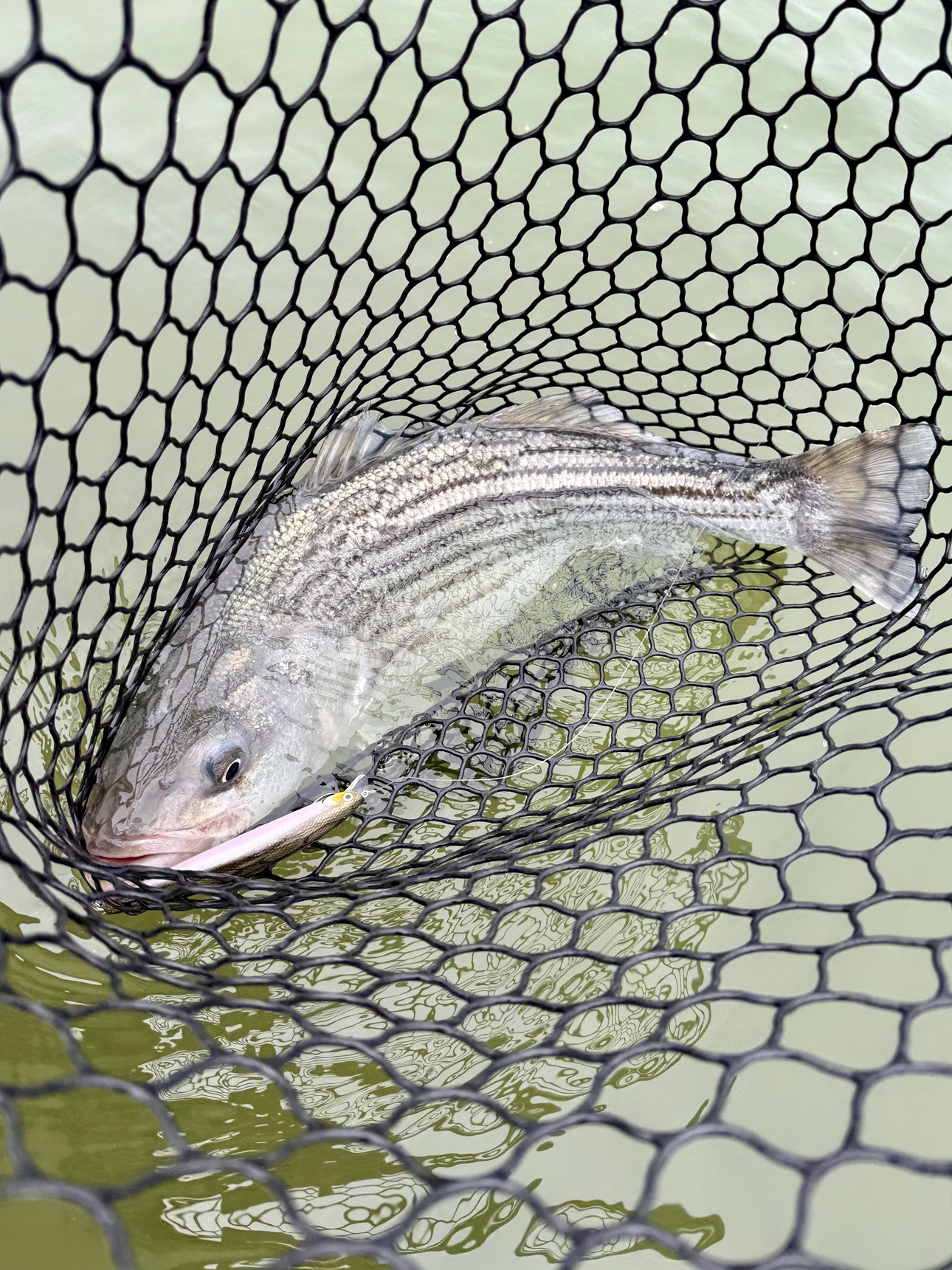
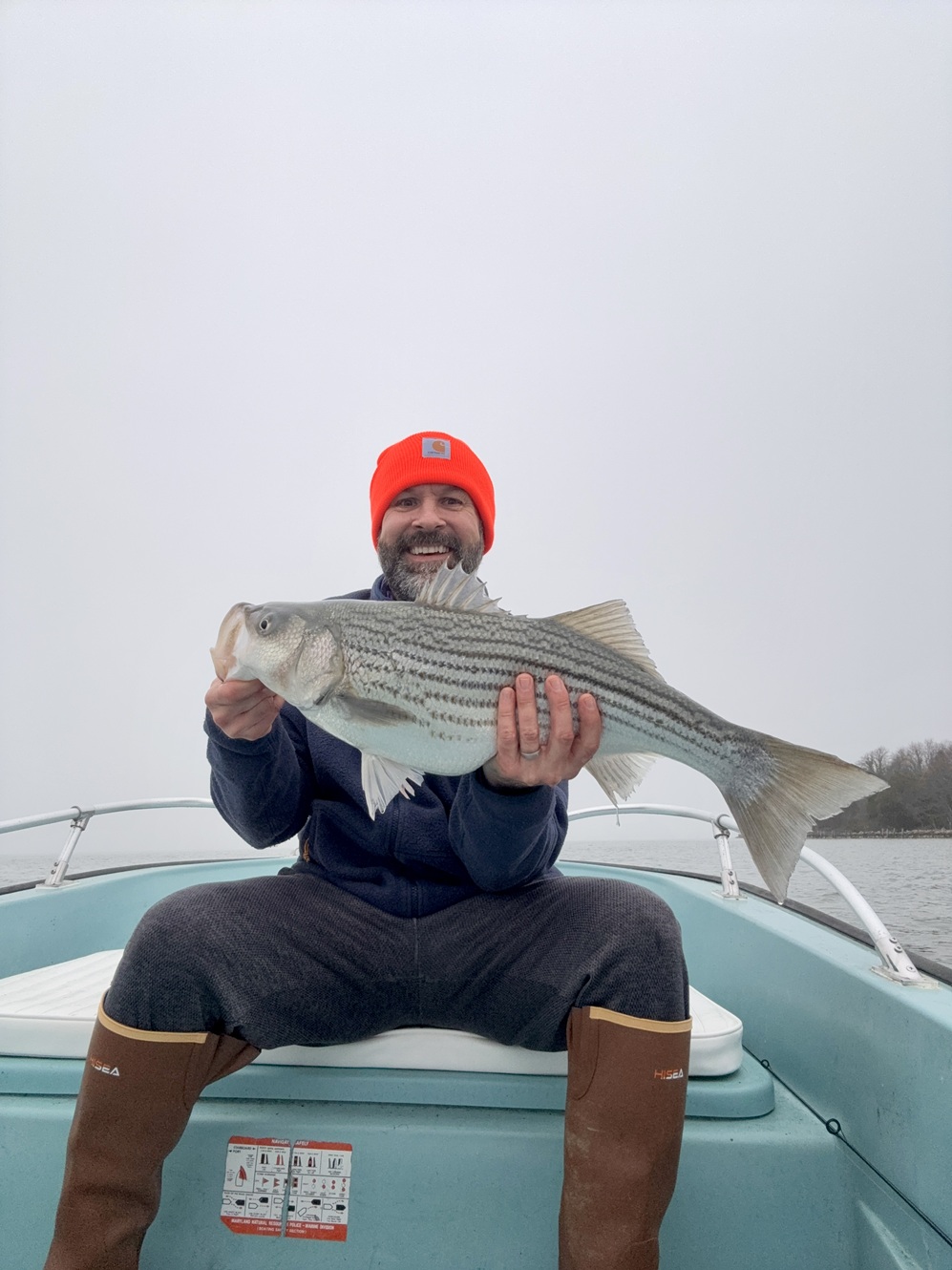
A few casts in, I felt a fish swipe the lure. A couple more casts and I hooked up with a fish that fought well. Carefully, I played the fish boatside, scooped it with my large rubber net, snapped photos quickly, and released it. The fish swam away strongly. It measured about 28”—maybe 30” with a pinched tail. For the next hour, it was cast and repeat, with fish swiping at the lure, an occasional hookup, and three nice fish landed. The largest of the bunch measured—I’ll say—a conservative 40”. Though I didn’t have my ruler on board (forgot to get it out of my other boat, darn it), this fish likely pushed past the 40” mark.
And like every good fish story, I did hook up with a mammoth that got away (bigger than the 40”+ striper?). And it was awesome! This fish followed my lure to within a few feet of the boat before zooming in to engulf it wholly. I got to see this beast bass swim up and inhale the lure, turn quickly to swim away, and peel drag. I was fortunate to play this fish for about 20 seconds before its own fortune allowed it to unbutton. Well done, fish!
By 10:30 a.m., the winds began to pick up, the fish seemed to cease biting, and the marks disappeared on the fish finder. Time to go home. En route, I did make a couple notable stops to cruise and scan structures. The first was the old Route 450 bridge concrete piles under/near the newer Naval Academy bridge. The second was the Route 50 bridge and the massive pilings on the eastern side. I did not mark fish at either spot.
Reflecting on the morning’s fishing, I can’t help but feel satisfied to have had a goal, a well-thought out plan, and to accomplish it well. Fishing during this time of year is more about the quality of fish caught than quantity, and this certainly held true for me.
You’ll also note that, while this report doesn’t give specific spots by name exactly, it more than offers the recipe for where I fished. I believe you’ll figure it out, and that’s quite fine with me. No one spot is mine, nor yours—they are for the fish and for all of us to find, explore, and enjoy respectfully.
See y’all on the water again, real soon!