Fly casting to schoolies is this summer’s new, fun, and curious challenge; a recent morning outing proved progress in the sport
Several years ago, I was cruising downriver at dawn to reach a particular sandbar point in the Severn that might hold feeding striped bass. As I throttled down and motored closer to my chosen spot, I saw an angler already on site. He was fly casting and I naively thought to myself, “just, why man? Why expend so much effort fly fishing, when a popper or walking lure tied on spin gear can get the job done more effectively, more easily perhaps?” Well, it’s taken those years between to heed the calling of the fly. And, here I am. This summer, I’ve challenged myself to catch the schoolie bite on the fly.
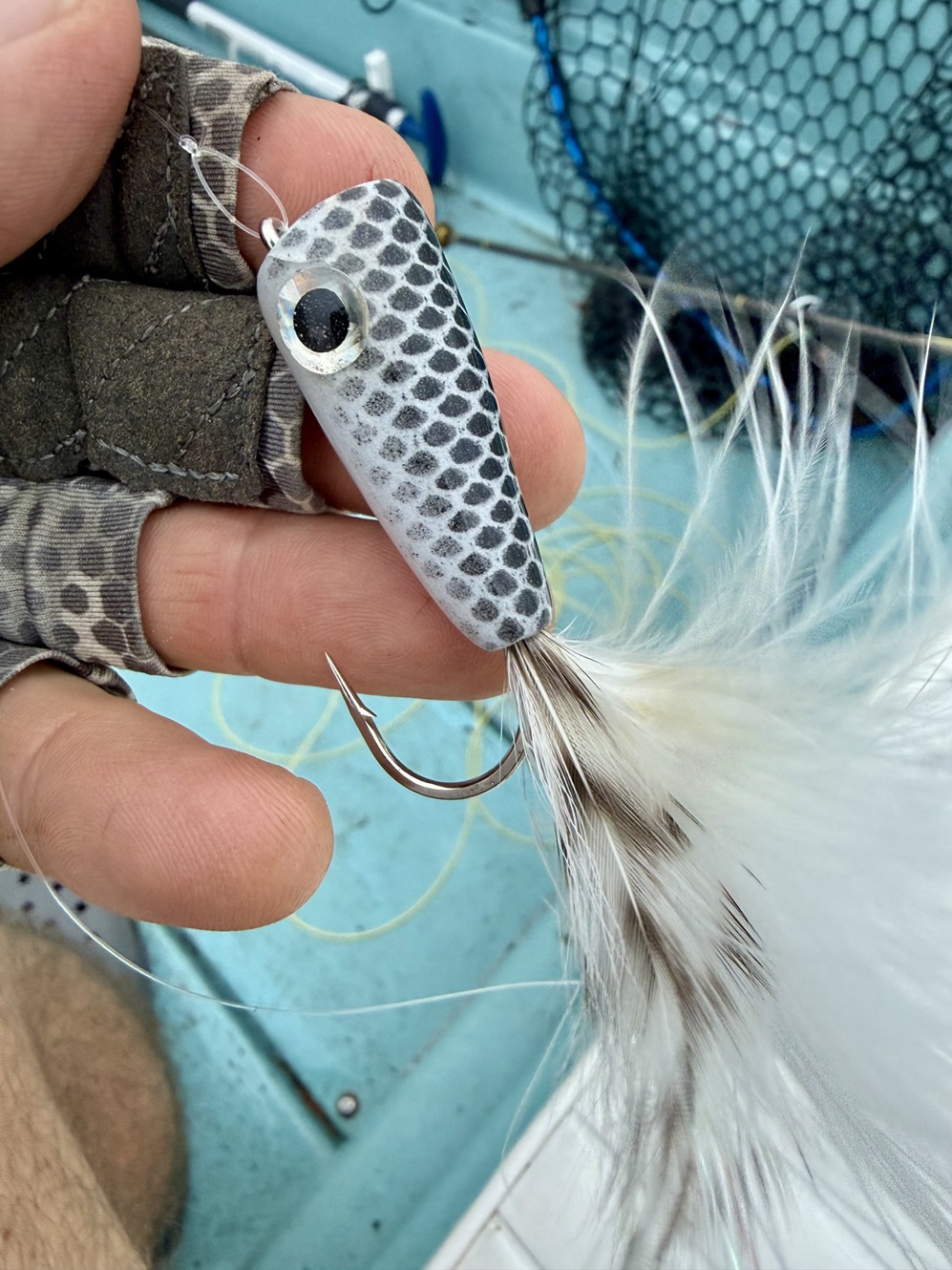
For years, I’ve been catching them on spin gear. On Smack-Its, Spooks, and Chug Bugs. Paddletails and Rat-L-Traps. You name it. The routine is always fun when the fish bite, but rather predictable. So, here’s the curveball—fly casting to these same fish. Can I do it? It’s been my white whale as of late, and a challenging learning curve. Gear, flies, lines, frustrations, and sore arms figuring out casts. This is supposed to be peaceful—an angling art form, correct?
On a recent Sunday morning, I hit the river at the most beautiful time of day—just before it gets started—and inched my way closer to peace of mind and the prize itself. We’re getting there.
With a stronger-than-preferred wind coming from the North and East, I launched my boat at 5:30 a.m. and motored to the leeward side of the river and an expansive point that harbors plenty of grass beds and sandy bottom. I would have to stay on this side of the river.
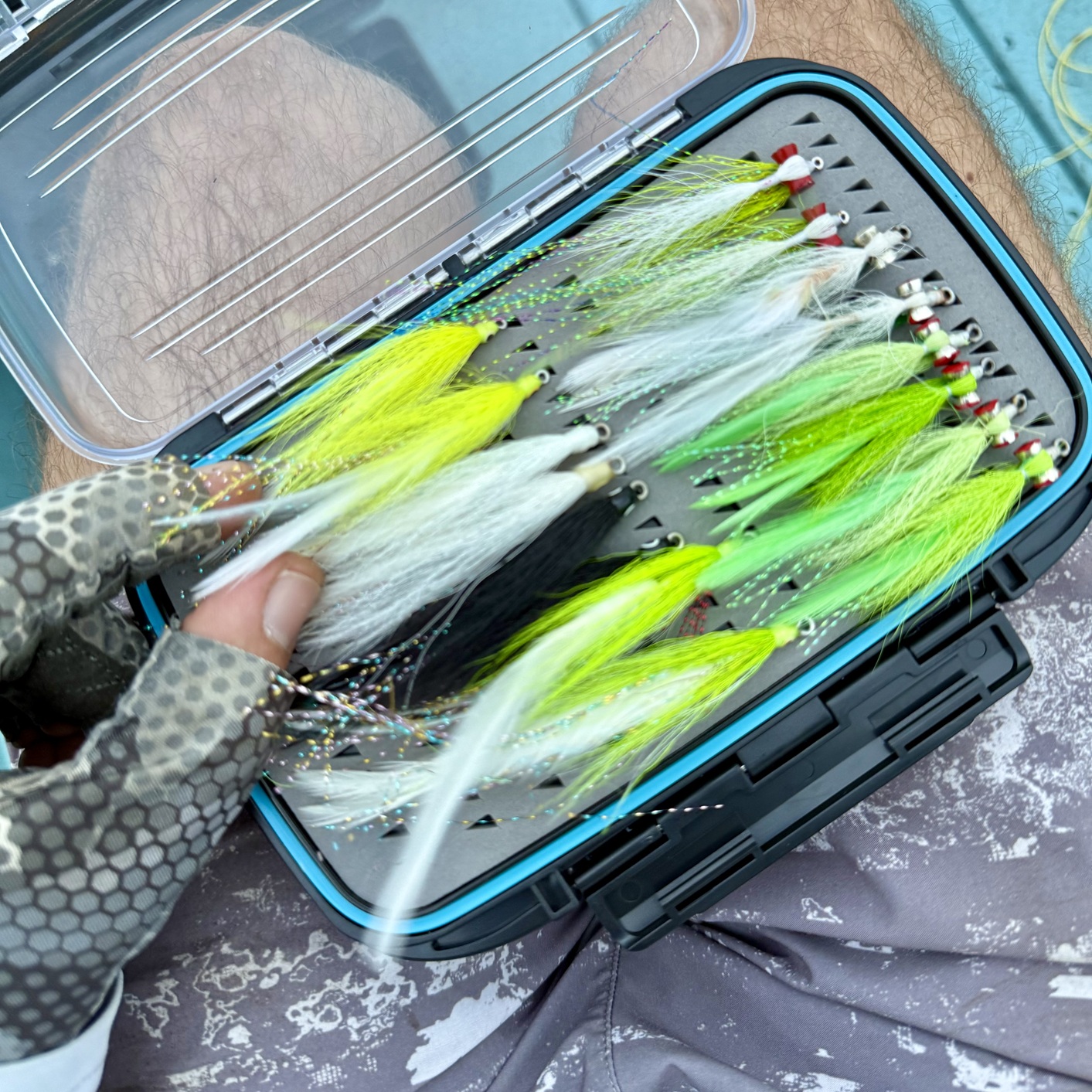
My early casting oscillated between into-the-wind and with it, throwing a chartreuse popper fly (and eventually changing to white colored – pictured) on a floating line, trying to capture a topwater bite before the sun started showing itself. There were a few fish on site occasionally smacking the surface, but not my fly. I worked the area fairly well. It was good casting practice at the least. I motored south along the shoreline to another area that harbors thick grass parallel to the bank and tried the poppers again. I tied on a Bisharat “pole dancer” topwater fly that does its best to mimic a walking style lure. This one was black. I stripped it rather effectively but I believe I need to work on distance casting in order to give this and other lures a better chance to work more water and draw strikes.
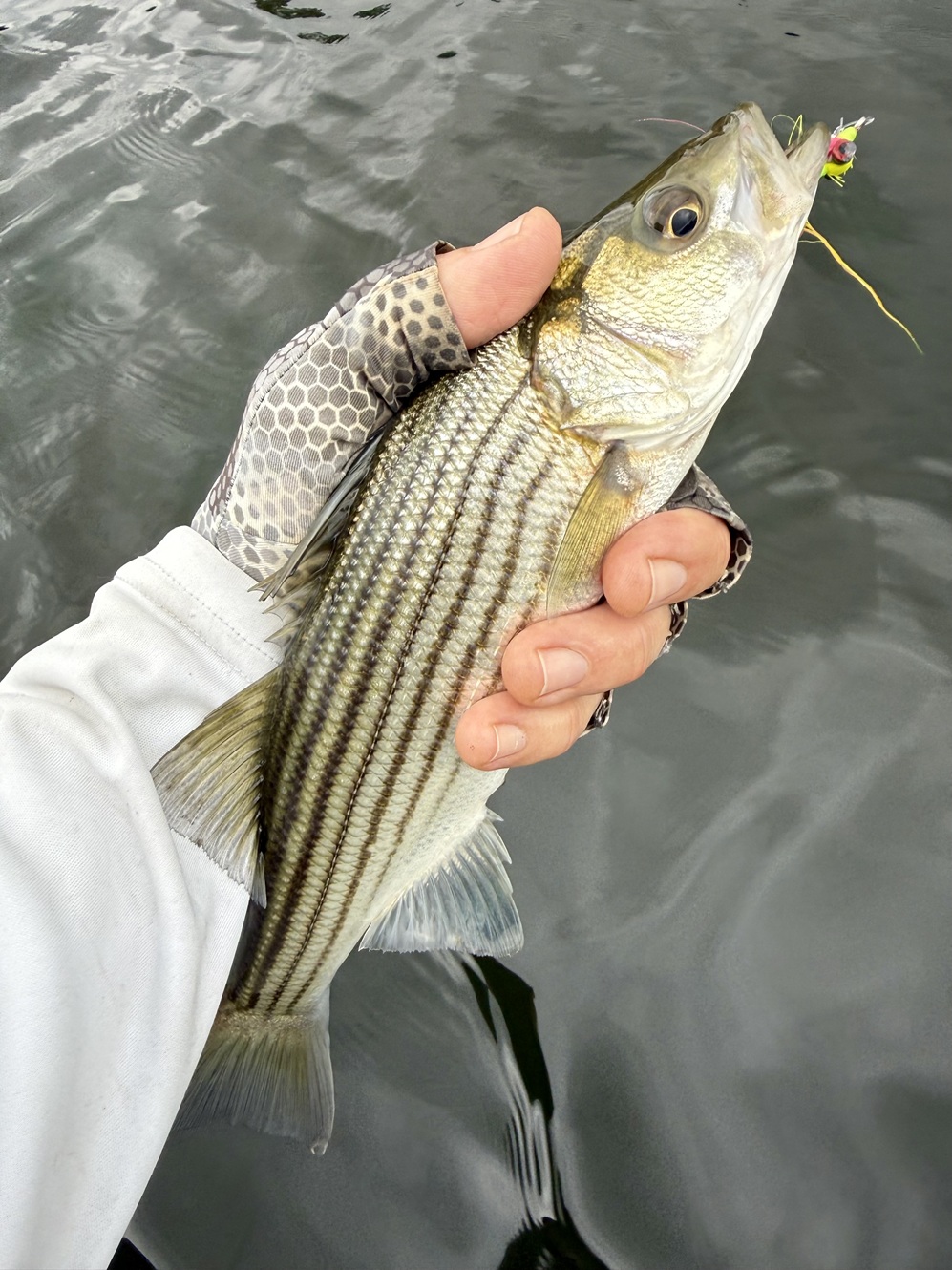
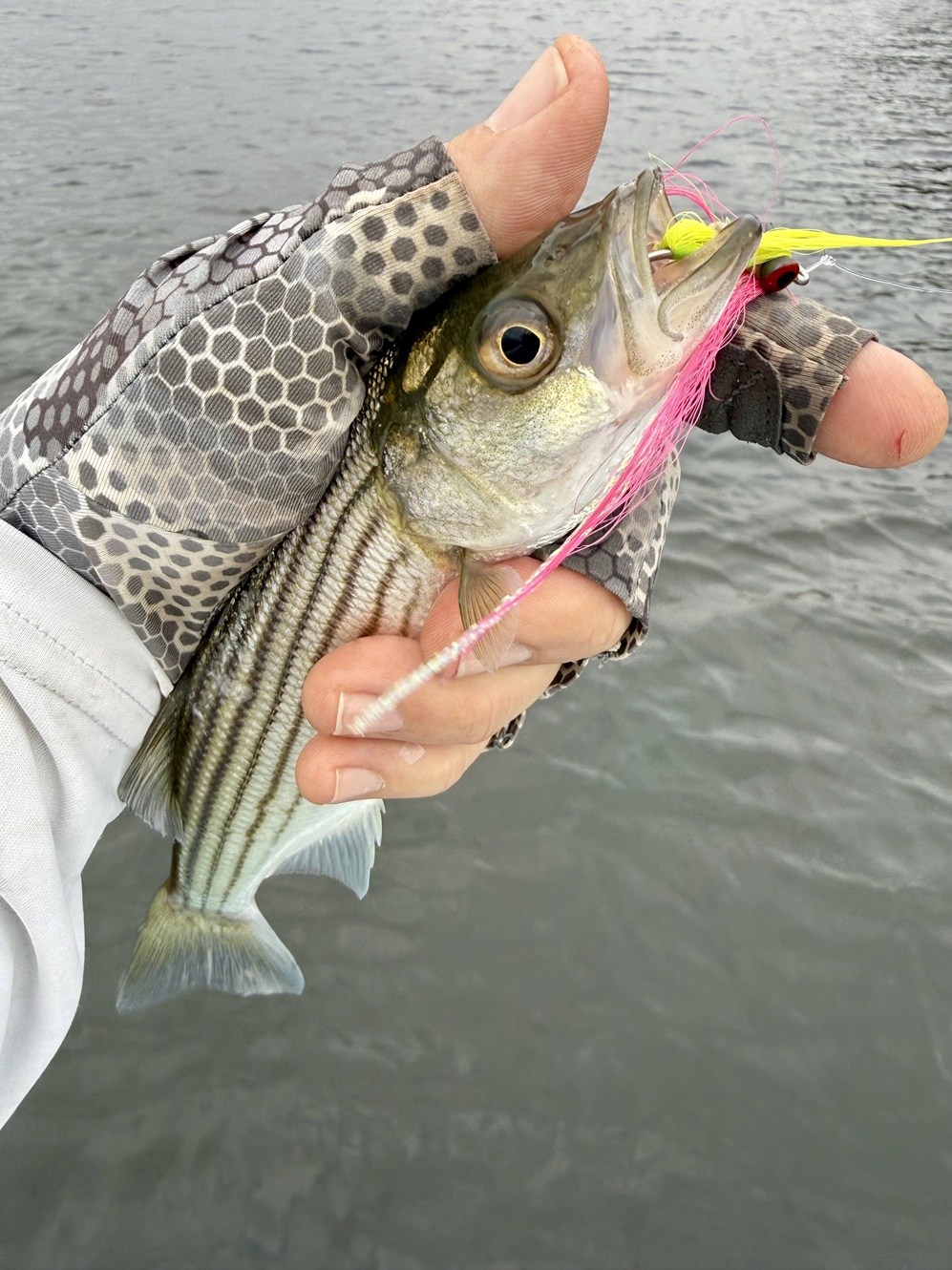
Having worked that area well enough to my liking and with the sun showing a finger above the trees, I decided to move upriver to a protected shoreline with deeper water and plenty of docks jutting into it. I switched to a reel holding an intermediate sinking fly line and tied a Clouser minnow to the end. This would fish the 5 to 10 depth effectively, I believe, if my casts went as smoothly as hoped. Some did, some didn’t. I let the wind drift the boat eastward and parallel to the shore with its perpendicular docks sticking out. I casted between them to the 5 foot zone and stripped the fly back to me into the 10–15 depths. From this, I had two fish take the fly—both small >14” striped bass. Small schoolies. A modest return for my efforts, but nonetheless evidence that I’m on the right track toward my goal.
I’ll note that between this particular trip and the previous, I upgraded my fly lines to a couple premium weight-forward options that should pair well to my limited experience. While I also upgraded my reel(s), the fly line is the big x-factor that has made a world of difference in my casting abilities, so far. Immediate improvement. No more tangled, inadequate lines at my feet. It pays to select a fly line engineered for the specific conditions to be fished in—at this time of year that, to me, implies a fly line rated for 80-plus-degree water and air temperatures. Basically salt-water capable lines suited for tropical conditions. (That will all change come fall when temperatures drop and colder-water rated lines enter the picture.)
The always learning and adapting part is curious and fun. The grinding through frustrations and inadequacies is the challenge. Putting it all together to reach the sublime is the goal.
See y’all on the water again, real soon!