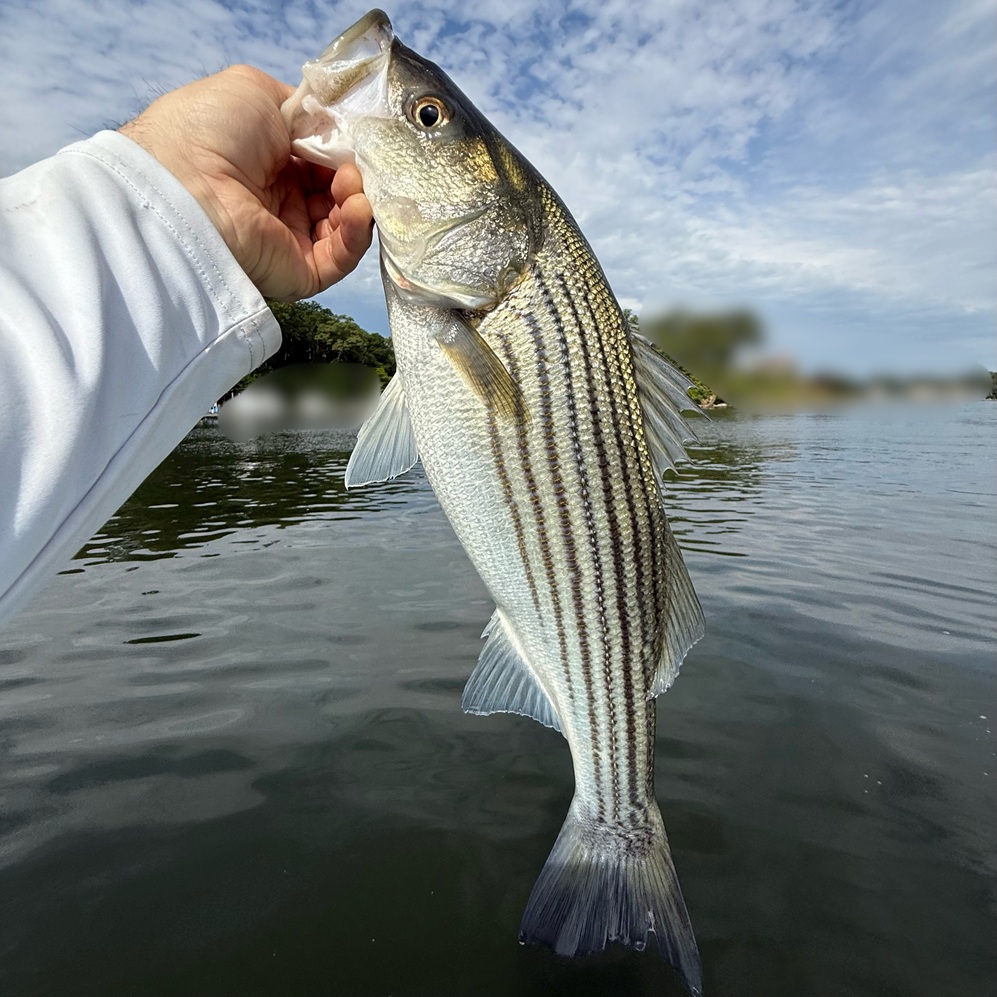
Hungry packs of striped bass are roaming middle Chesapeake Bay tributaries, providing a fun angling opportunity!
The late-spring striped bass pattern in the middle Chesapeake Bay tributaries—specifically the Severn—entails finding roaming packs of feeding schoolies in the river. The past couple springs have produced schoolies at dawn, dusk, and the hours between with bite windows open for a couple hours on either side of the sun’s rise/set and the tide’s highest water. The high-slack to outgoing tide has been a good bet if you want to find fish feeding from May into June, as the striped bass begin to move upriver in search of baitfish.

Peanut bunker (juvenile menhaden) and rain minnows hang within the creeks during day and night—and they swim in/out of the creek mouths during low-light as they traverse larger water. They’ll get caught by cruising stripers and sometimes you can find bait balls and schoolie stripers dancing around deep water near the creek mouths adjacent to structure like sandbar points, rock jetties, and shallow flats with docks and submerged grass.
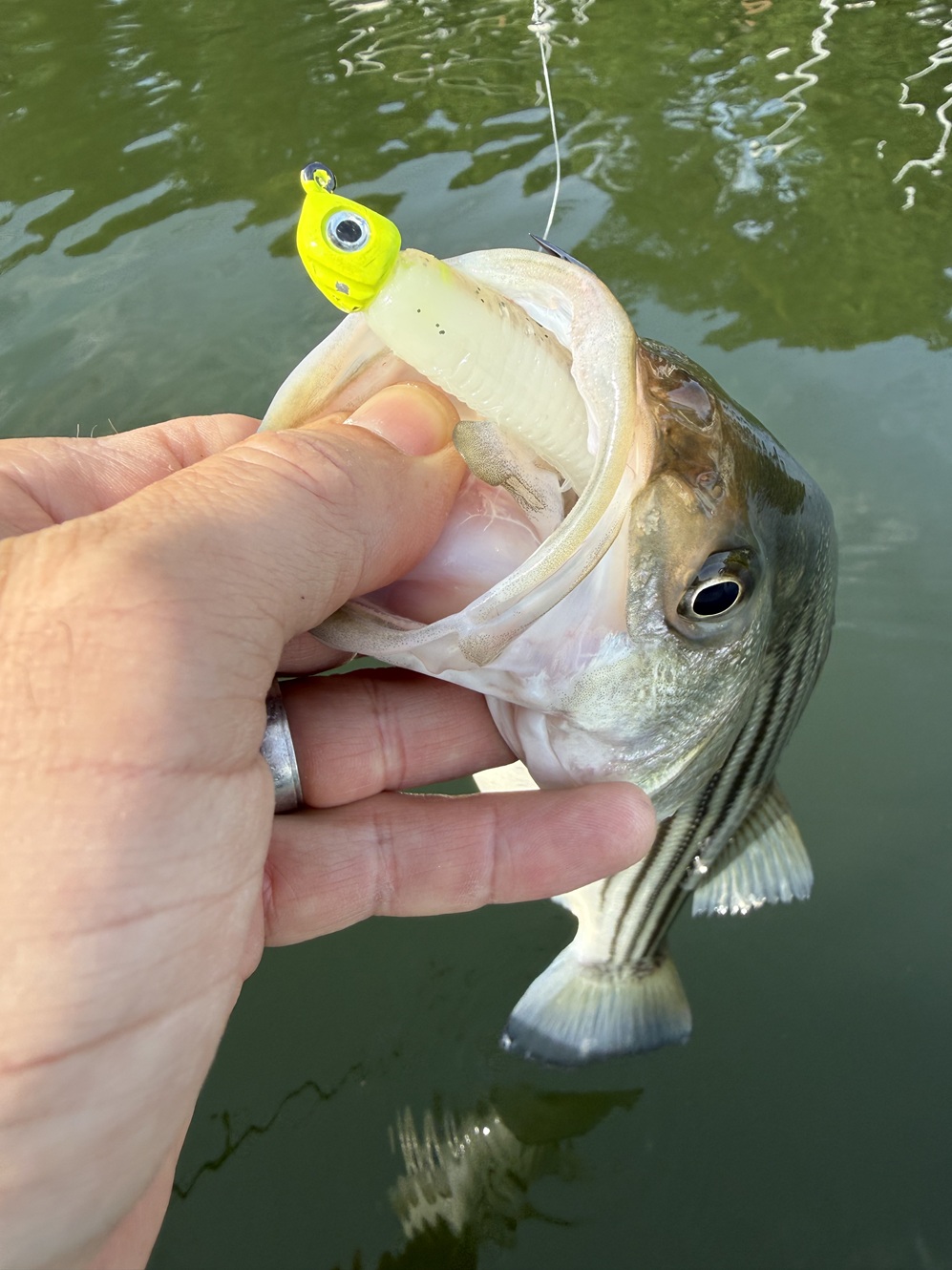
On a mid-May Sunday morning with the New Moon and little wind, I enjoyed fishing for schoolie stripers with several methods—each a possible producer. (1) Casting topwater plugs across shallow points and flats at dawn/sunrise, (2) swimming a jighead/paddletail between docks and in deeper water near them, and (3) pitching a bucktail under docks. In the Severn River, I ventured from my home creek to several points jutting into the main stem, all within the Round Bay vicinity.
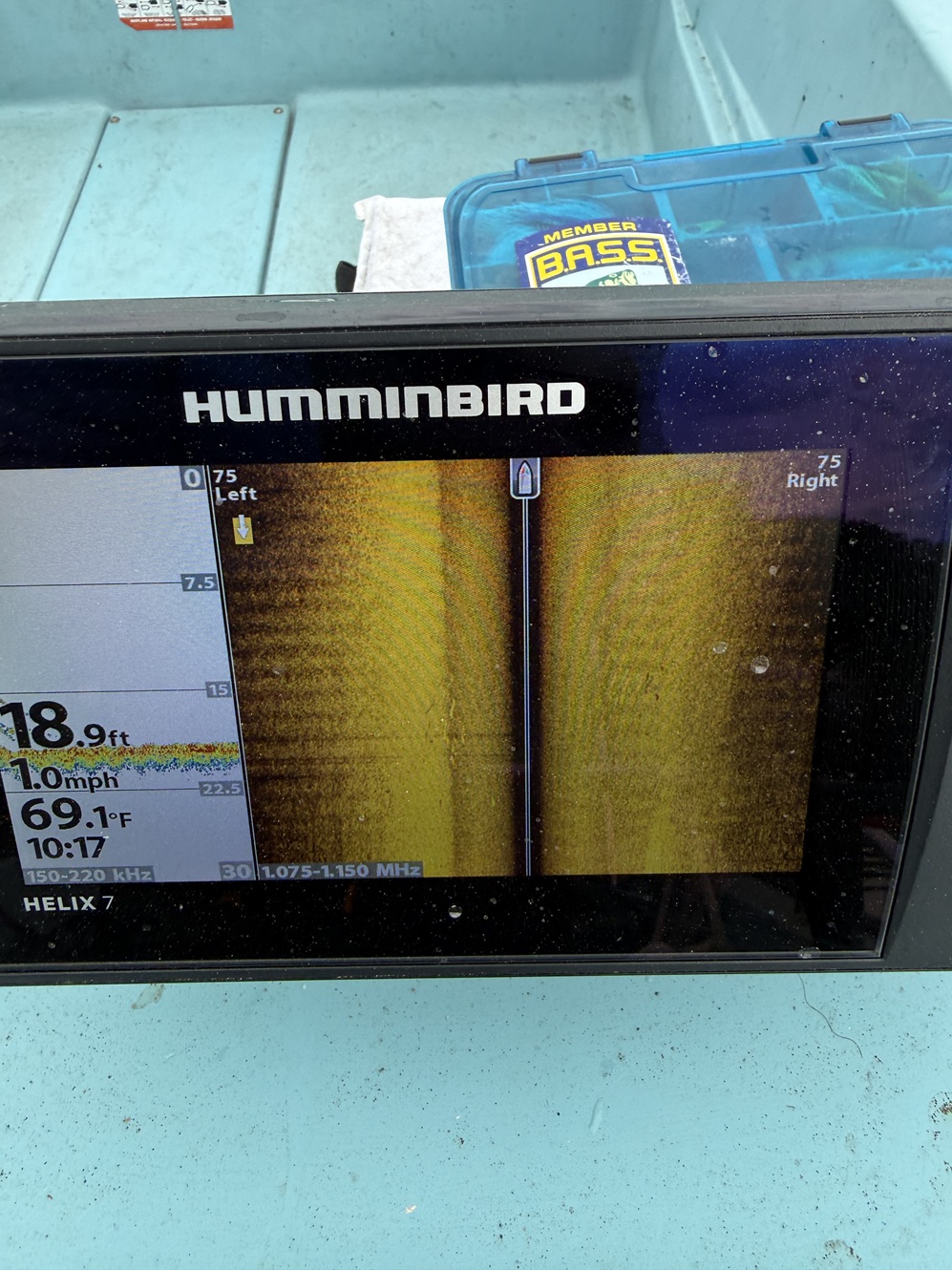
The early dawn bite was a bit slow, but I managed a couple fish on the paddletail around docks (one fish up to 22”). I attribute the slow bite to a slack tide, even though water temp was just about perfect at 69F. Once the water started moving, however, the fish became more active. I got another striper to bite a bucktail casted under a deep-water dock (about a 20” fish). Feeling a sluggish vibe overall, I decided to motor into an area with two sandbar points with a shallow flat shoreline running north to south between them, mixed with docks and grass. I cruised quietly with the troll motor in deeper, 17-20’ water at about 40–50 yards off the shoreline and, in short time, found myself in the middle of a feeding pack of schoolies busting baitfish on the surface. It was a small blitz of fish, all of which were about 20–22” in size.
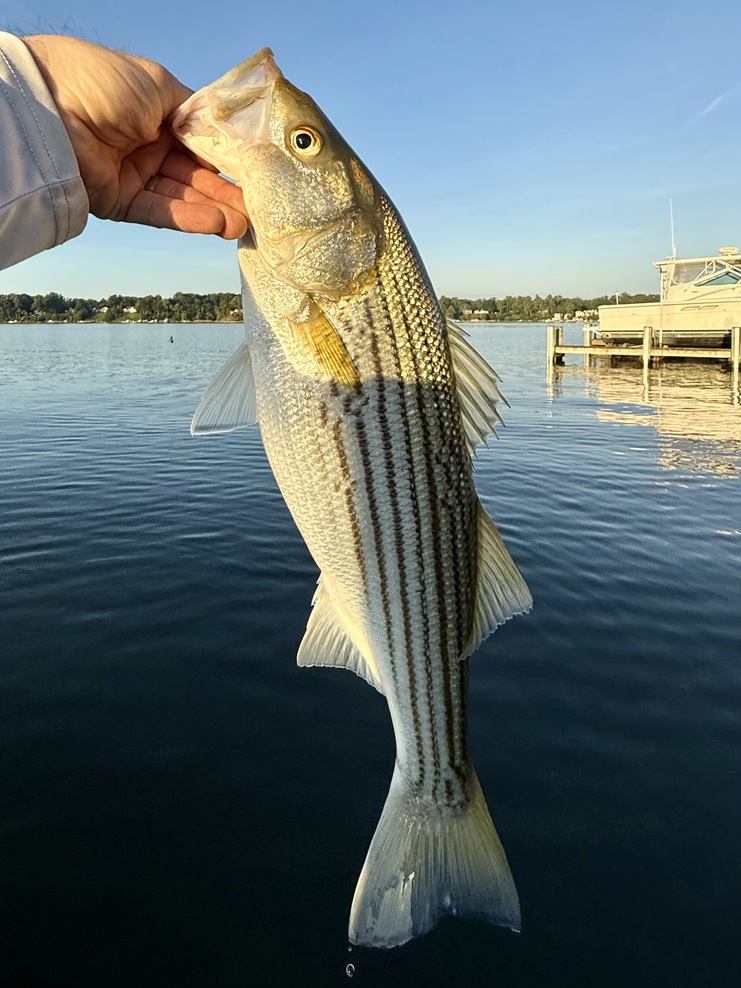
The pack would surface, feed, dive back down, swim around, and repeat. All I had to do was stay quiet and cruise back and forth slowly. I’d mark the pack on side-scan before they’d surface, so it was fairly easy work catching them. This was fun cast, catch, and release fishing for a solid half-hour window or more. After about 10 fish, I called it quits and headed to the boat ramp feeling a smidge of success. Though I hoped to enjoy some topwater action at dawn, the feeding fish made the morning a wallop of fun—and I mean, a wallop. When an aggressively feeding striper hits your jighead, you get a whipcrack bend in the rod, quick tug of drag, and a feisty fish on the end of the line. Good reason to give them another go this enjoyable spring before the summer heat fires up.
See y’all on the water again, real soon!