
Observations in the Severn River offer clues about striped bass abundance and mid-autumn patterns
Fishing in the last week of October can be an angler’s dream in the rivers and creeks of the Bay watershed. This is the time of year when water temperatures cool to the low-60s Fahrenheit and the fish—particularly striped bass—switch their feeding instincts to overdrive. Baitfish, like menhaden and anchovies, leave the creeks and migrate downriver toward the open Bay and, eventually, the Atlantic. The bass, a.k.a. rockfish, will congregate at ambush points, structure, and rips along the route to capture their prey. The wise angler will put the puzzle together (migrations, tides/currents, moon phase, winds, locations, etc.) to try his or her hand at intercepting them. I enjoyed four outings during the last week of October (and we’ll count November 1st among them). But the fishing was challenging. The conditions were mixed. The target species was very tough to pin down (two skunk trips out of four). This begs the question, “Where did all the rock in the river go?”
I’m inclined to believe several factors are at play for their disappearance: (1) Overall numbers of the schooling class of stripers (fish two- to five-years-old, and about 15” in size upwards of 30”) are down year-over-year due to poor spawning classes dating back to 2019 (with 2023 being especially poor); (2) Baitfish abundance, especially menhaden, in the rivers is lower-than-average due to even more factors (the biggie: commercial overfishing of the Atlantic biomass); and (3) weather/water conditions. This isn’t a hot take, but does bear repeating.
Autumn seemed to take a couple weeks longer than usual to develop. Northerlies and cooling temperatures didn’t materialize until this month. We didn’t have a regional cooldown in September to much effect. We didn’t have a crisp morning or two in late-August, which usually does occur. So, when the weather switch turned on suddenly in mid-October (a week of sustained, cold north wind dropped temperatures quickly), I believe fish began a quicker-than-usual, mass outward migration from the rivers.
That said, there does seem to be decent numbers of schooling fish in the Patapsco River section of the Bay (this has held true each of the past three seasons), and further south around the islands and sounds of the Eastern Shore. Charter captains’ and anglers’ intel leads the way. So if you want to find blitzing striped bass putting on the feed bag these next couple weeks, you’re likely to find them in those areas.
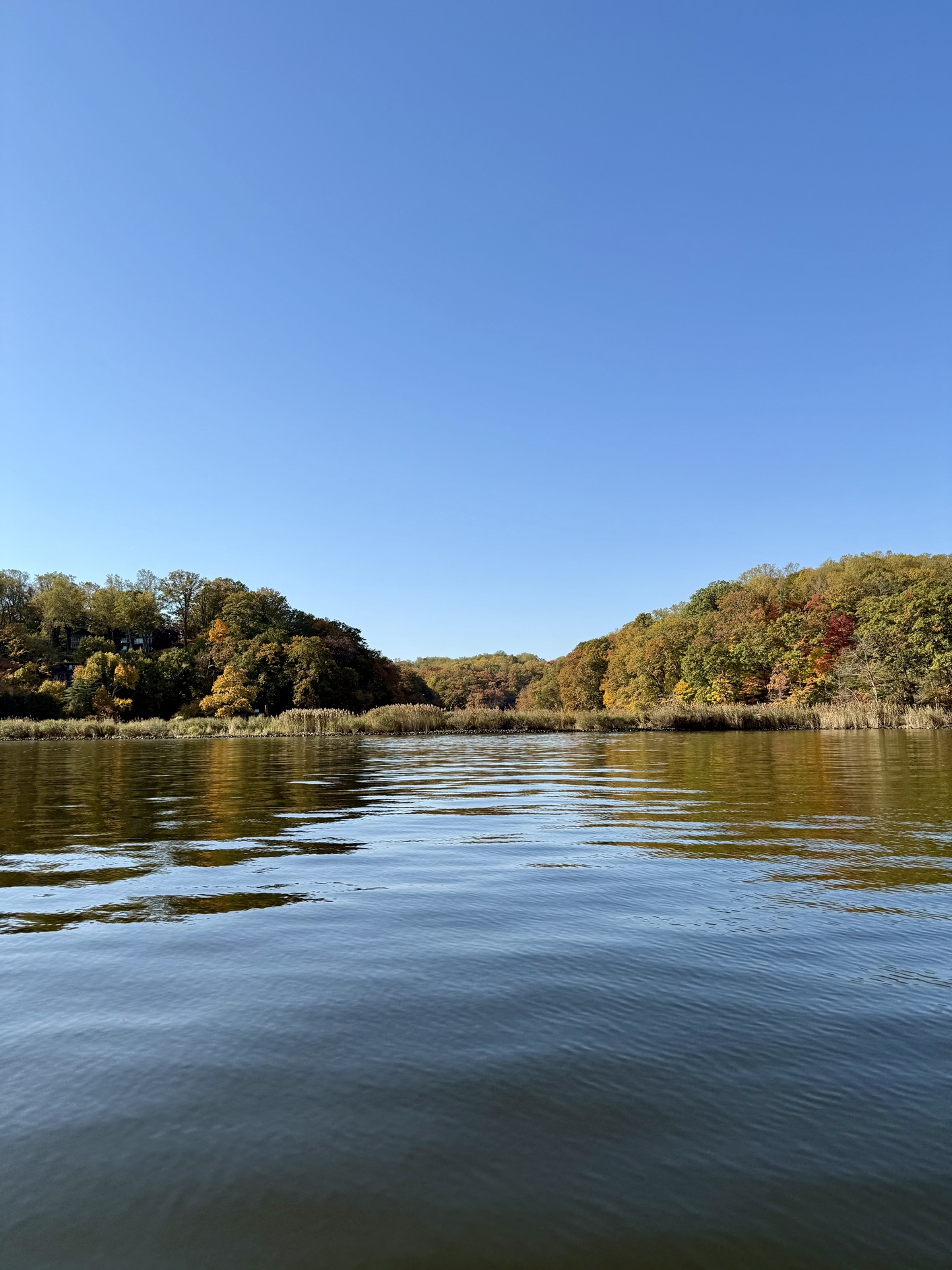
My vessel limits my range to my home river, the Severn, and a few areas outside of it on calm days, unless I trailer it elsewhere (I seldom do). And so, with those winds blowing all week upwards of 20+ knots at times, I stayed within Severn waters. I did recon the river closely though, from as far north as the Narrows to below the Route 50 bridge—a rather large sample size of this water body. What I found was less bait than the previous several weeks and, certainly, less striped bass. Using my down- and side-imaging on the Humminbird sonar unit, I would observe the life (or not) around the many sandy points of the river, plenty of shallow flats along the shorelines, deep water dock areas, creek mouths, major bridge pilings, and several reef sites. In four outings, I marked only one small school of stripers—a sixer wolfpack that wouldn’t hit my bunker fly during an evening cruise.
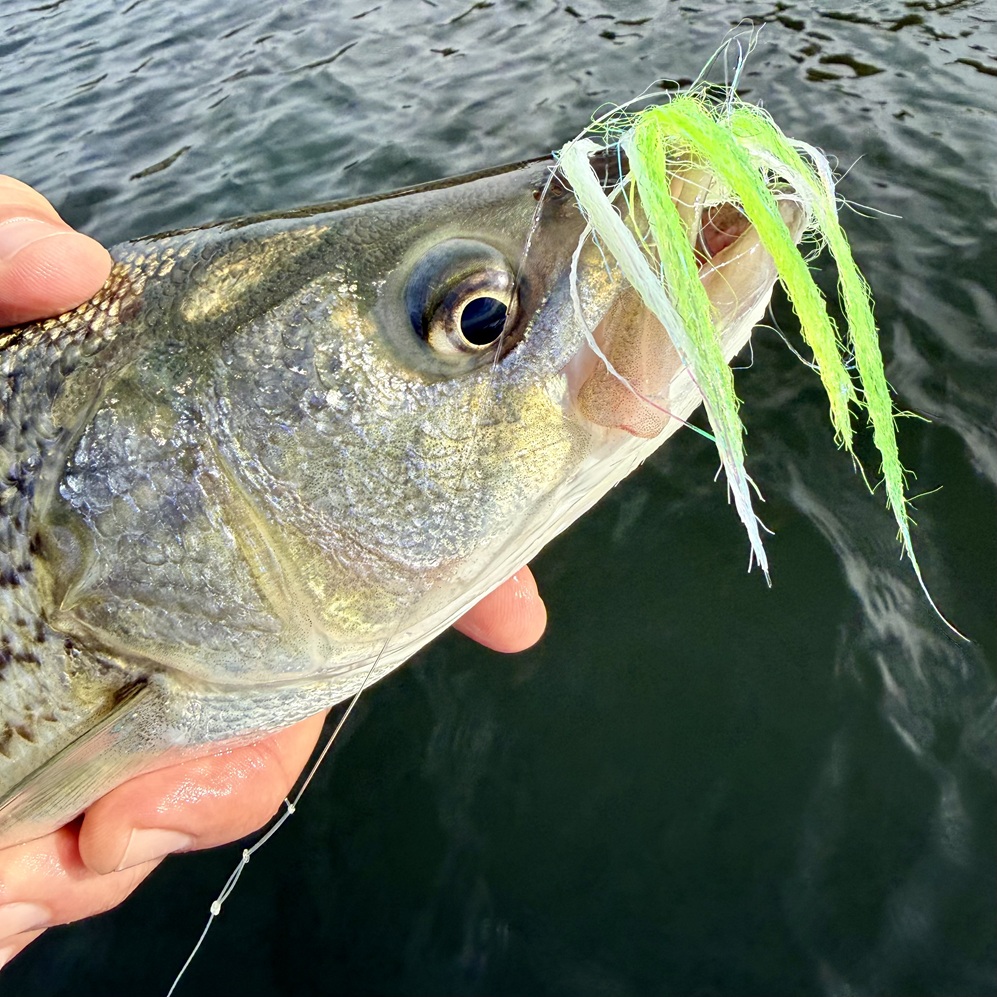
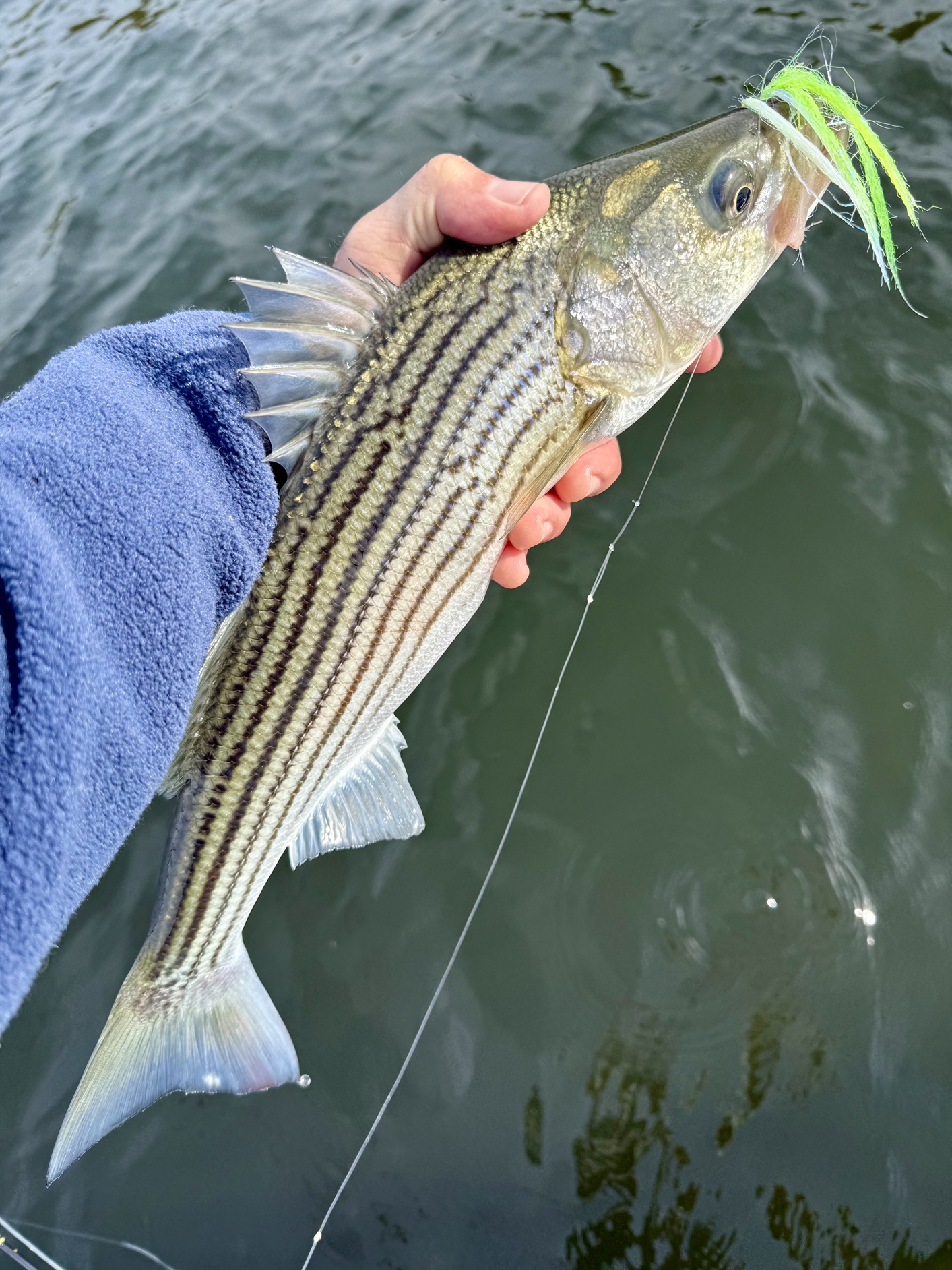
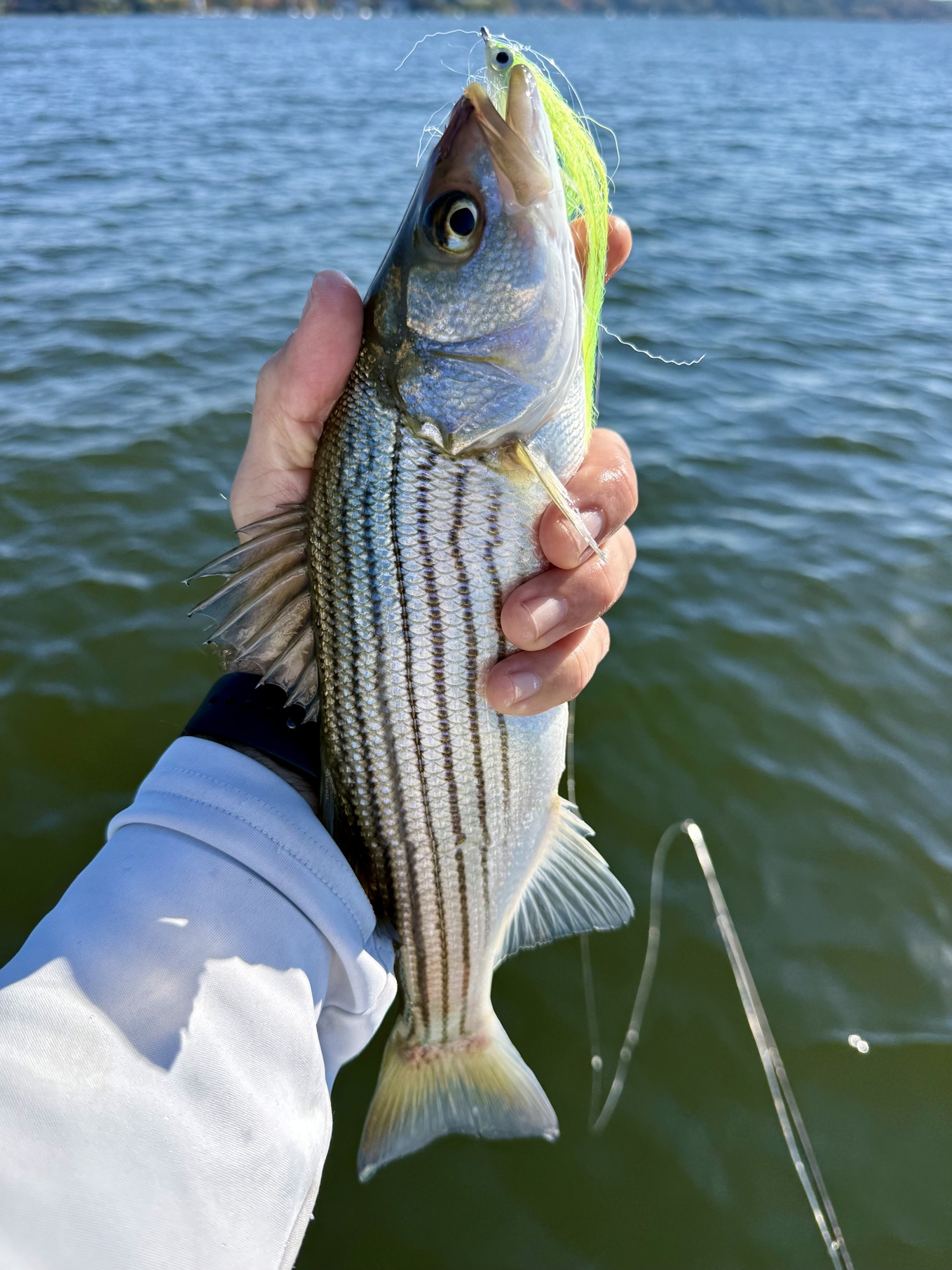
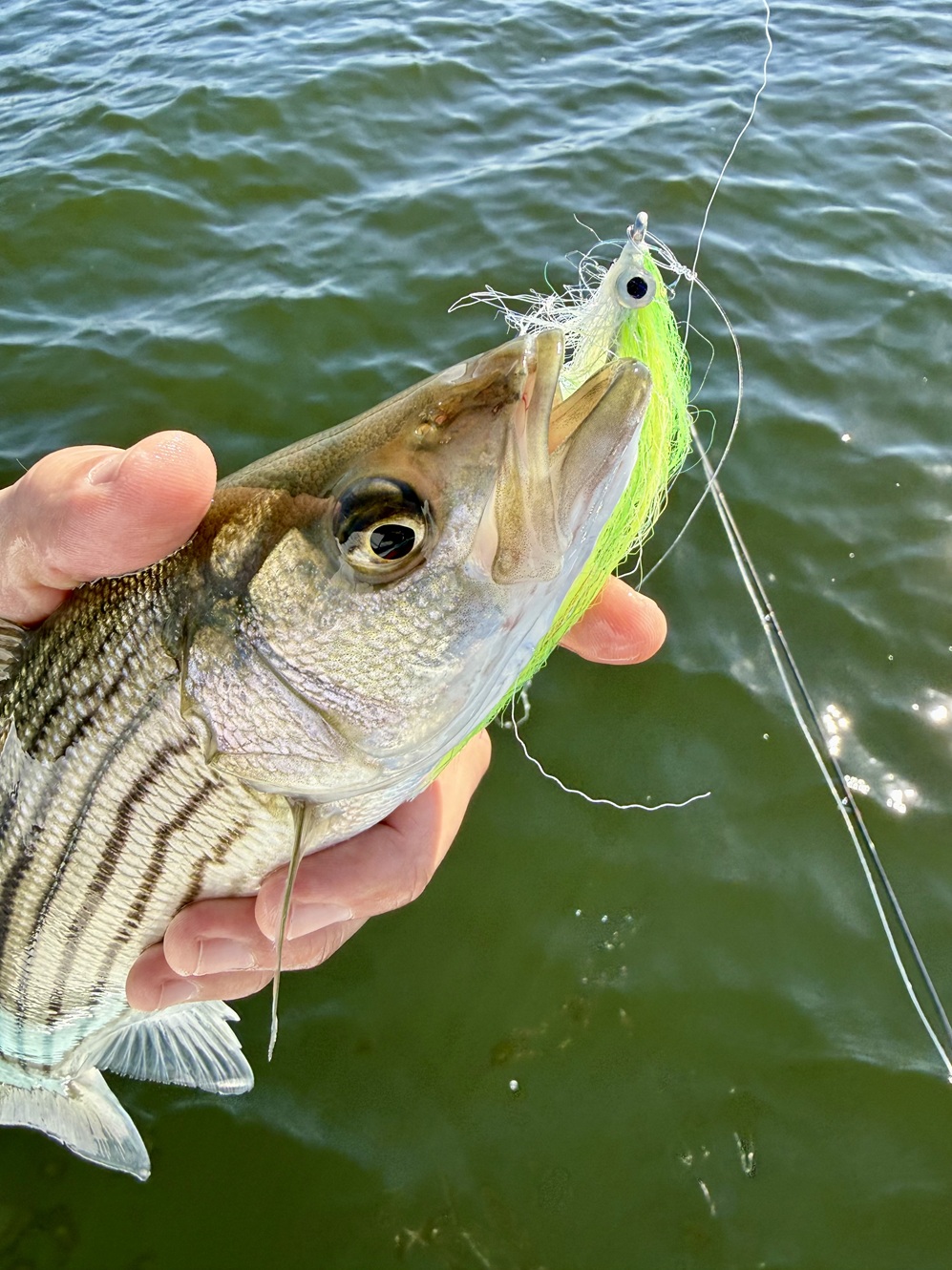
There are, of course, rogue fish swimming throughout the river that are catchable and that is what I found on a couple trips. Fly fishing with my recent go-to bunker fly on the 8w with intermediate-line around several generally-reliable areas saved two of my outings with healthy fish on the end of the line. Fine, beautiful fish in fact.
Until stripers come up empty on several more river outings, I’ll continue fishing for the rogues, of which I’ve caught a few sizable ones in years past (upward of 28”) well into December. By then, I’ll also be targeting the stealthy pickerel and gorgeous yellow perch. And when things get really, really cold, we’ll start to see the large Atlantic migratory stripers return to Chesapeake waters from such far flung locales as Montauk, New York, and the Jersey coast. They can be caught at the massive points and dropoffs along the main stem of the Bay. This year into the next, I intend to fish for them on the fly. We shall see.
See y’all on the water again, real soon!
Disclaimer: includes Amazon Associate and non-sponsored company links. As an Amazon Associate, I earn from qualifying purchases.


