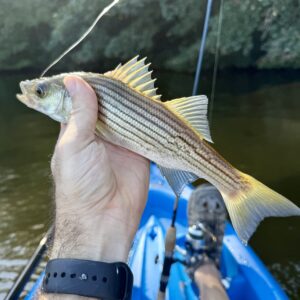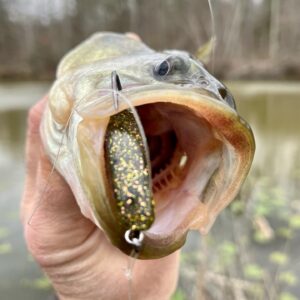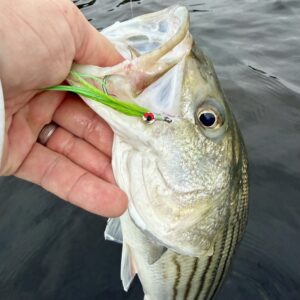
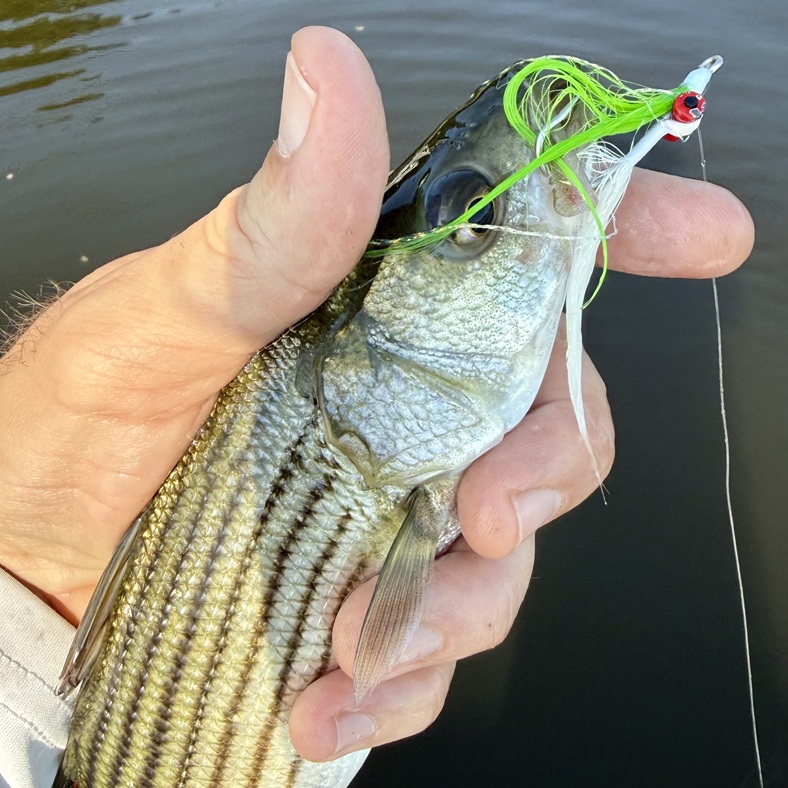
Two outings this week made for excellent fly casting practice, and a few fish on the end of the line!
In the past week, I’ve made two trips to the river at dawn to flex the 8-weight fly rod with both floating and intermediate lines coupled with a variety of flies. How does one measure success fishing? The easy answer is, fish! Catch ’em and you know you’re doing something right. But for me, lately, it’s been all about the mechanics of a hundred casts, of 30, of 10…of every single one. And if I can feel increasingly comfortable and controlling of each cast during every outing, then I’ve made modest gains on the fly. It’s been a fun but rewarding challenge this summer, of which I can feel the payoff coming very, very soon.
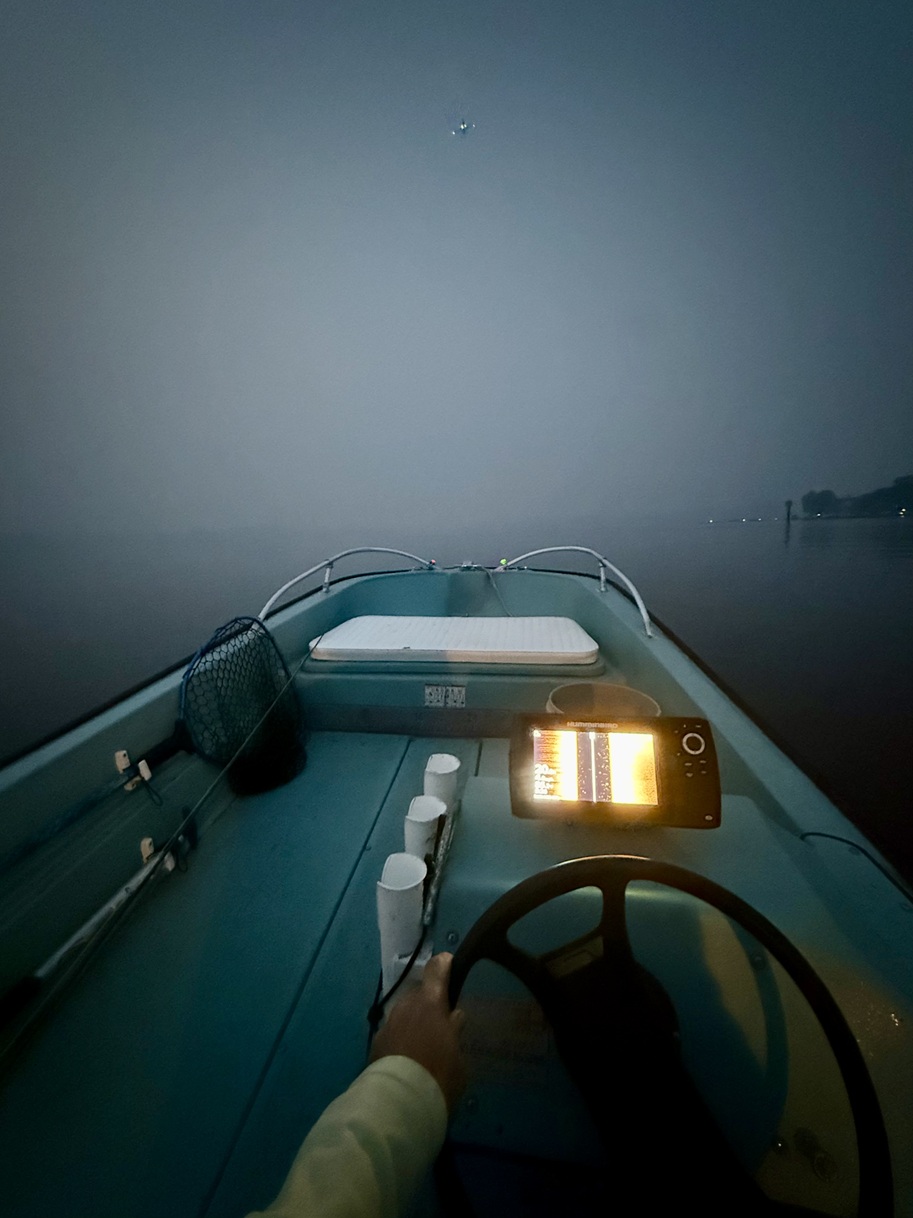
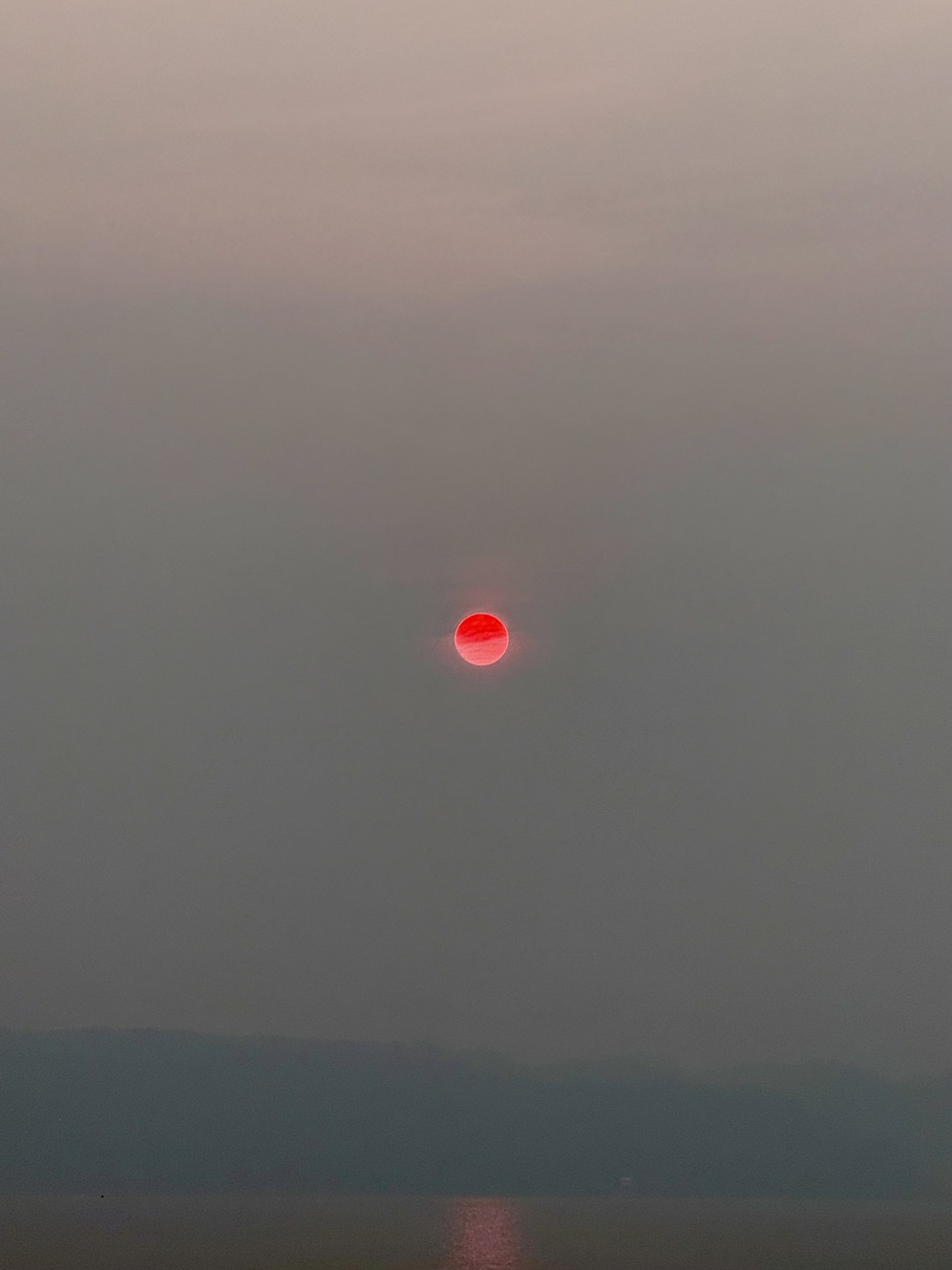
Okay, so back to the fishing. Like every trip, each was unique this week. On Friday the 17th, I stepped outside to load gear into the boat at 4:40 a.m. and instantly smelled the now-familiar and disturbing odor of wildfire smoke. The drafts, wafts, and whatnot from the Canadian wildfires had moved into the region overnight. Twenty minutes later, after launching the boat, I rode out of the home creek into a dense, smoky eeriness—much like fog—that hung over the river. Riding through this shroud definitely made me second-guess what the Sam Hill I was doing out there in the middle of the Severn River. So, I slowed down en route to my spot (some deeper water hanging just off a shallow cove) and motored cautiously and quietly into my first casts.
Before the sun had cracked the horizon, I already had about a half-hour of casting done, and no fish. There were a few rises during this time, but no takes. My fly casting with the floating line is still very much in practice-mode with plenty of flips and flops that surely startled any fish that hadn’t gotten the memo that the day was about to begin. The good news, I tried working a gurgler, which I very much enjoyed working across the water. At one point, a burst of fish popped the surface just a few yards out of my casting range. A good sign that sadly didn’t develop into much more (for me at least).
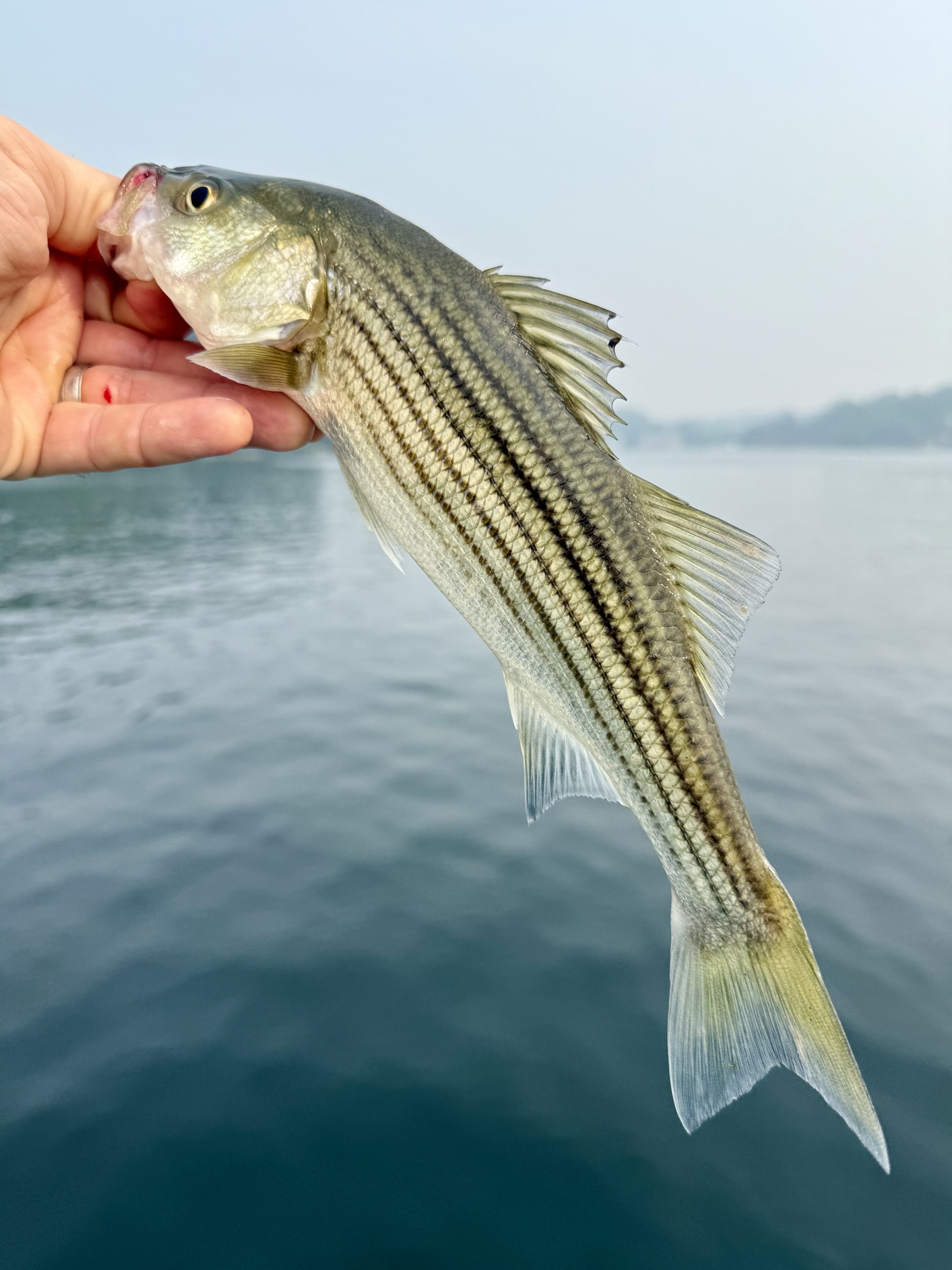
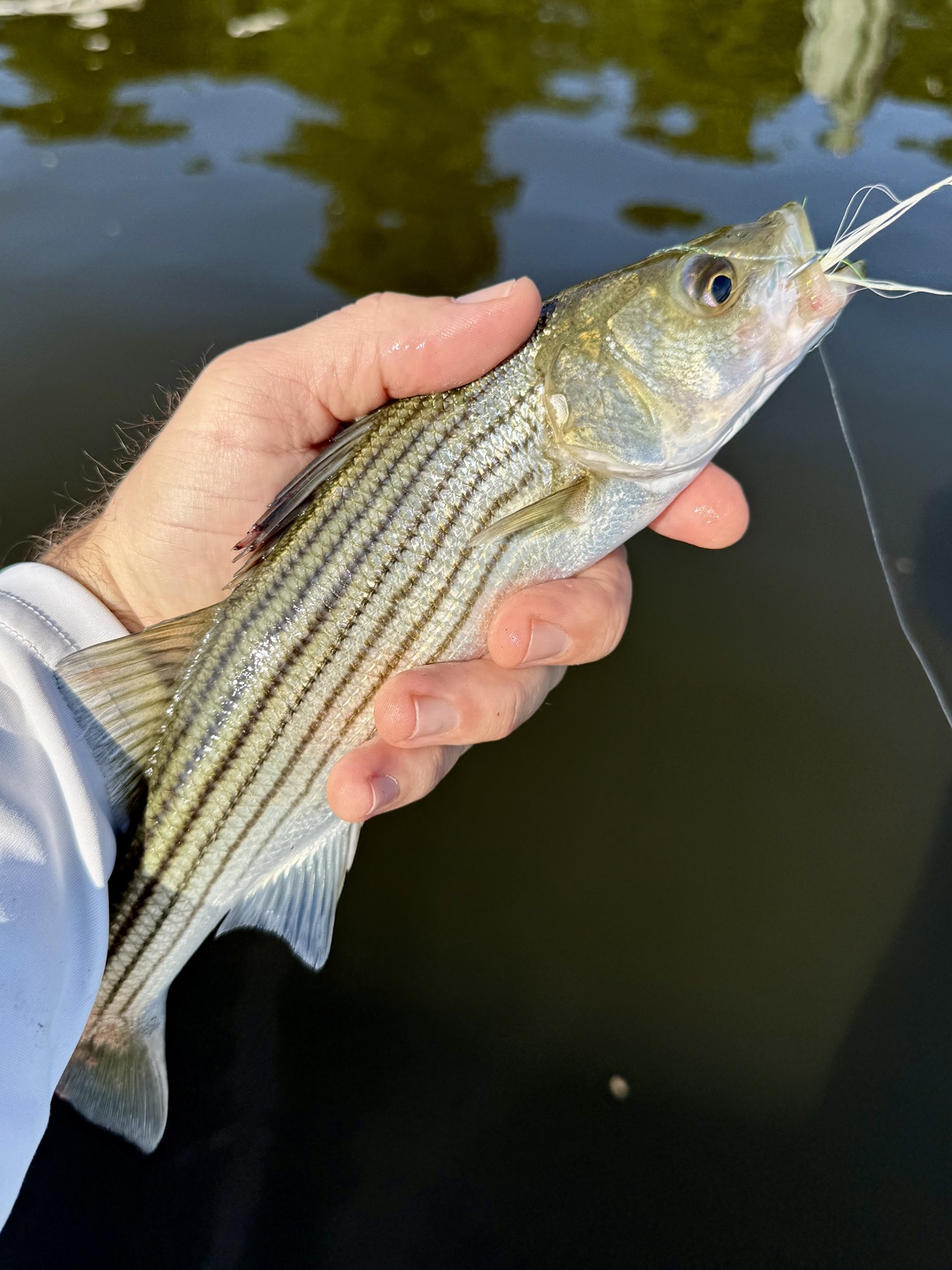
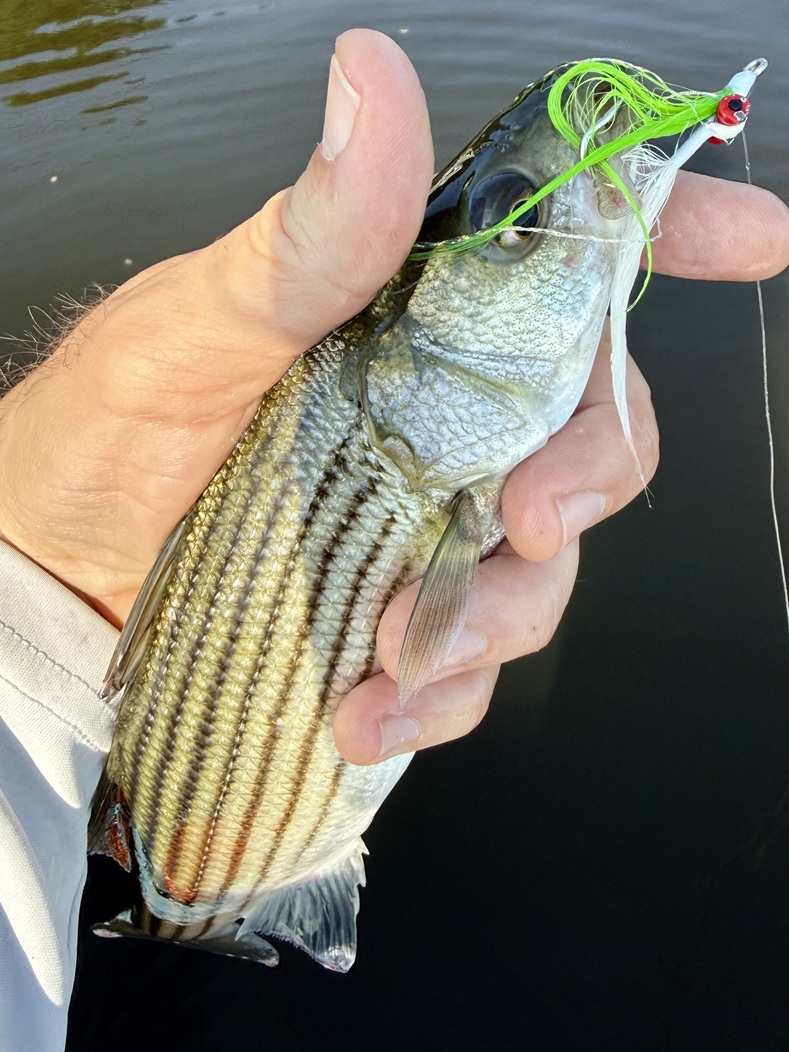
Moving on, I trekked upriver and casted along a riprap seawall that’s often susceptible to water movement from winds, tidal changes, and boat traffic. Because of this, the spot often holds some fish. The water depth transitions from about 6 feet into 17 rather quickly, so I switched to an intermediate line and tied on a Clouser (my go-to lately). Making several deliberate casts produced a couple hits, one of which was a healthy, small schoolie striper of about 14” or so. A modest gain that ended this trip on a mildly satisfactory note.
Recapping the day via text with a fellow river angler offered some intel about recent fish movement in the area, possibly due to dolphin activity much further downriver. Something I filed in the back of my mind.
Today, the 24th, instead of taking my usual route when exiting my home creek, I made the opposite move and headed into waters I don’t often fish during summer. The evening before, I pre-selected the spots I would fish based on predicted tidal movement, wind direction (east), and satellite imagery. By 5 a.m. I was on the water and motoring to these areas, the first of which was a sandbar point that I’ve caught many fish off of in years past.
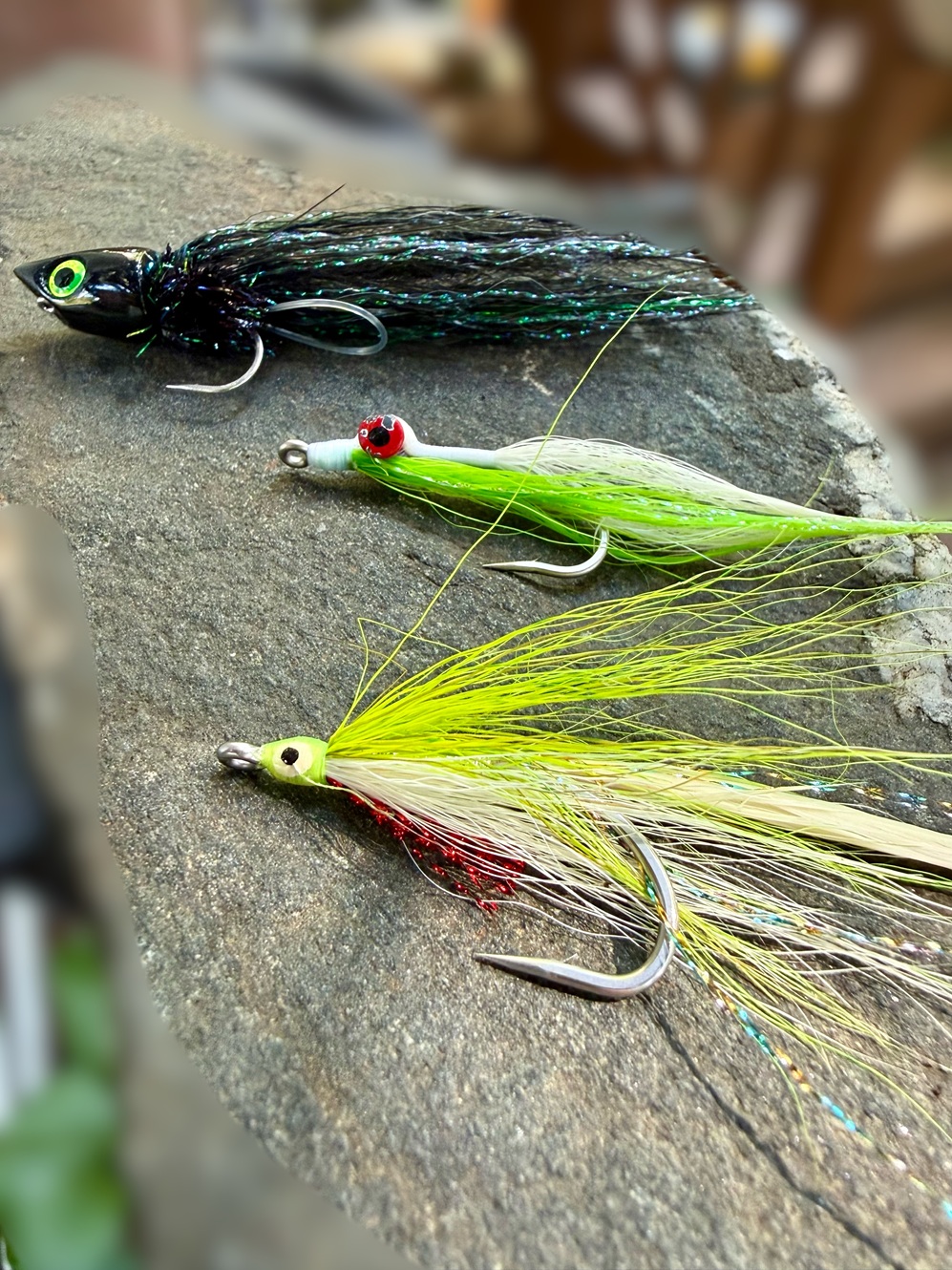
Sliding quietly into position, I began casting a 4″ Bisharat “pole dancer” fly in black. It was still dark outside, and black is a very good color at this hour. The “pole dancer” can be casted afar and stripped back with a methodical cadence that gives the fly the characteristic “walk the dog” action. Very cool. My casting of the floating line with this fly was moderately improved over the previous outing. And several times, a small school of fish busted the surface feeding on minnows. Proof that fish were in the area and hungry. Try as I might, however, I couldn’t get these fish to take my fly. Even when I tied on a Deceiver, working it just below the surface. Sigh.
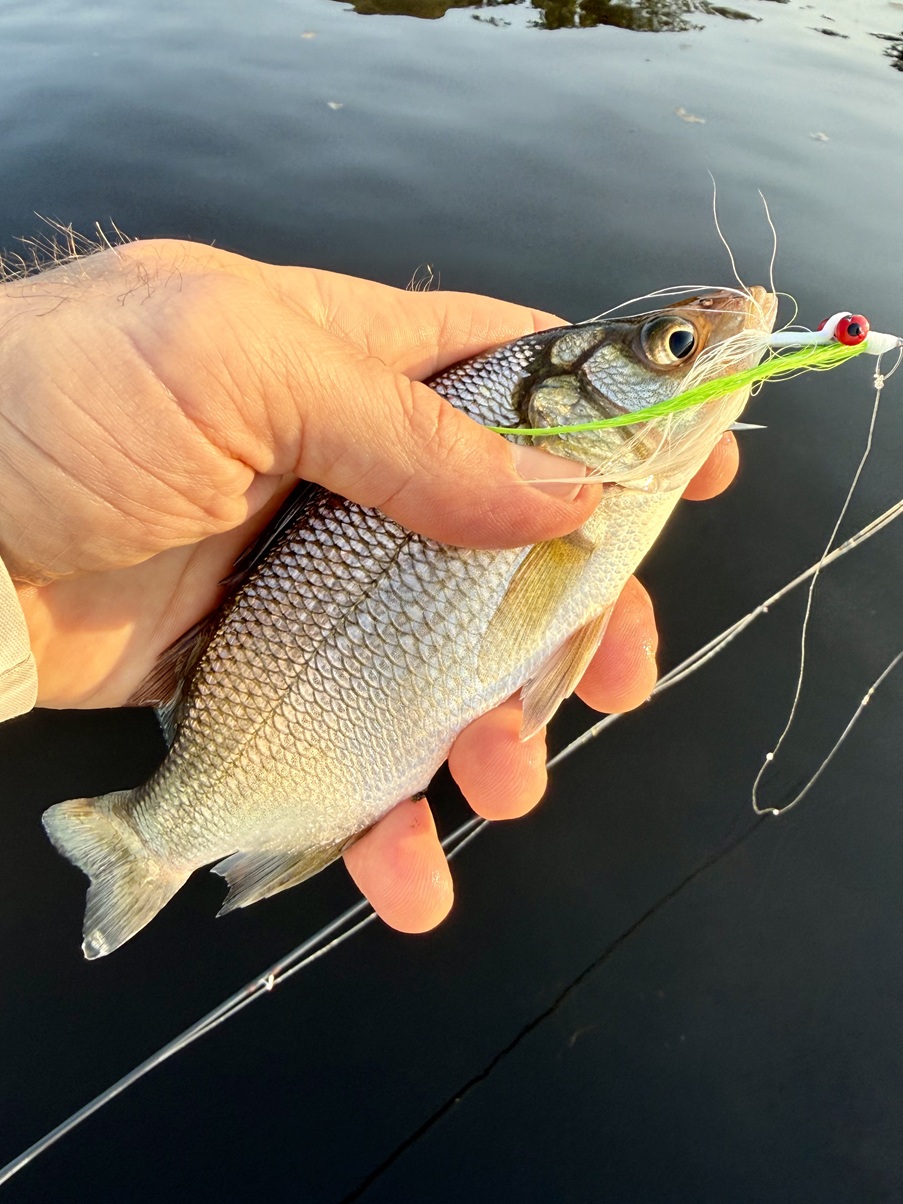
I moved from this spot to another, giving it a “resting period.” At spot number two—a touch further upriver—I hugged a shoreline with several tiny rock jetties jutting into the stem. Here, I switched to the intermediate line and a Clouser fly in chartreuse and white. Here, I ditched the skunk on the boat by catching a couple small white perch. Not the target quarry, but slightly entertaining nonetheless.
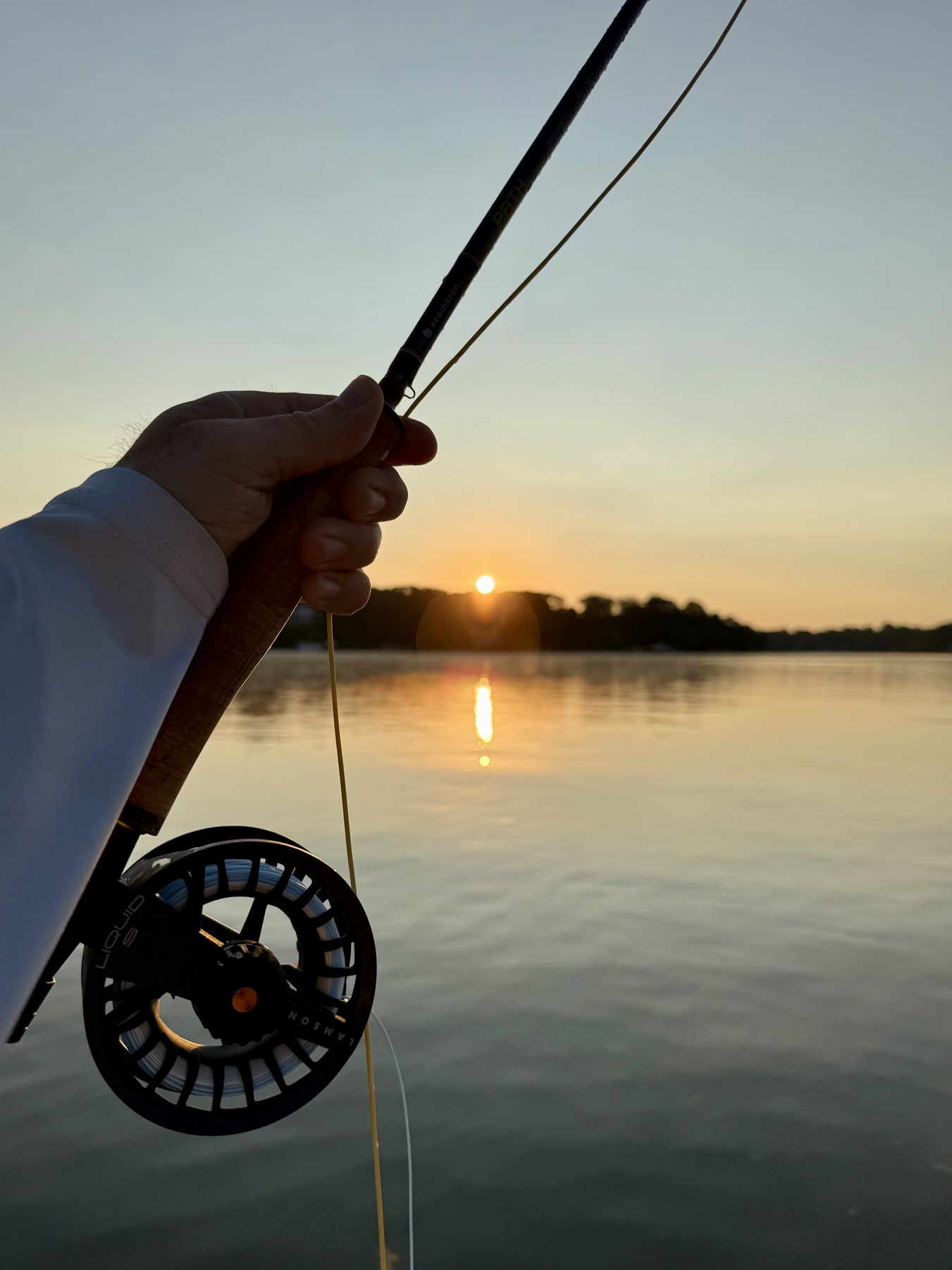
From this point, I let the north wind gently glide me back downriver and along another shoreline, this one riddled with several large boulders. No takers here, but an excellent opportunity to practice casts. Further south I blew, finally arriving at the day’s starting location. Fish showed here and there on the sonar and I worked the deeper water (about 10 to 20 feet) with that same fish-catching Clouser. Eventually, I found myself at the same riprap seawall I visited a week prior. Here, another perch caught. And then a small striped bass. And then, a schoolie pack on the meter and a very nice hit and pullage from a fish that was likely in the 20” class. Not big, but bigger. Sadly, he or she shook the fly and that was that. I plied the area thoroughly and got a couple short strikes before calling the day and heading home.
Observations. One—my casting is improving. I’ll take it. This is all practice leading up to the fall bite. Looking forward to that. Two—what a difference a week makes in terms of water quality. Where I fished today, the water was very dirty, stained. I’m thinking an algae bloom has developed. There have already been reports of algae blooms occurring downriver. With one week of fishing left before the August striped bass fishing moratorium, my feeling is that the timing of the closure couldn’t be any better. Evidence of summer’s heat and heavy rains is showing in the river.
See y’all on the water again, real soon.
Disclaimer: includes Amazon Associate and non-sponsored company links. As an Amazon Associate, I earn from qualifying purchases.