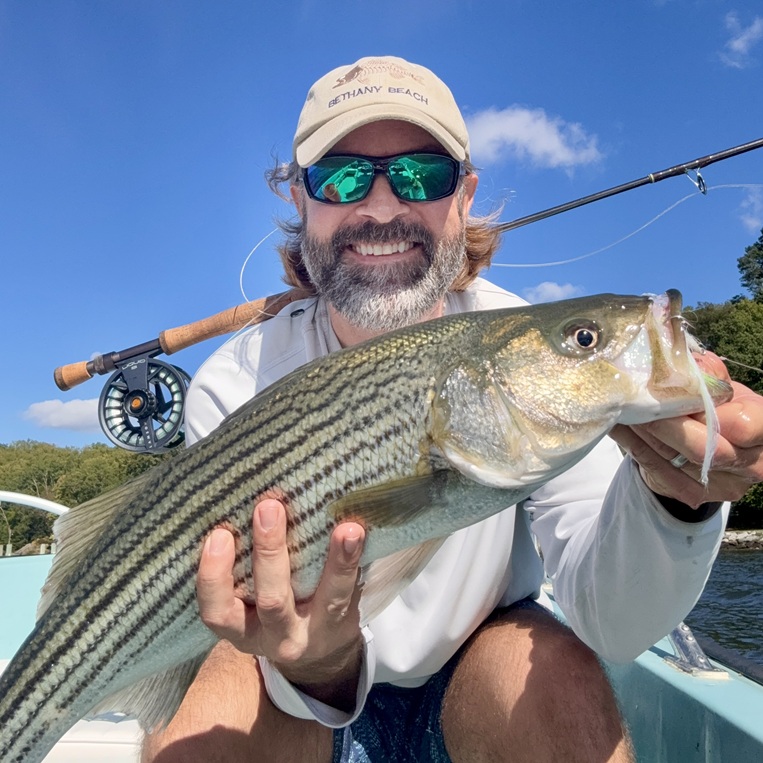
Autumn striped bass lie in wait for the patient angler that casts with purpose and poise
When autumn on the river turns to madness with sporadic weather conditions, whipping winds, avian aerial assaults, and enthusiastic angling pressure, sometimes you simply need to slow down, pace your casting opportunities, and study/appreciate the environment to find success. The methodical approach catches fish if you trust the process. This week I saw the first significant amounts of birds blitzing over small schools of striped bass, the rev of outboards chasing them, missed fish, and an alternative pattern pay off.
Water temps in the middle of the Severn River are still hovering between 68F and 69F degrees. The winds this week blew in from all over up to 20 knots at times—first from the north/northwest and by Friday, from the south. With tides being on the weaker side due to the approaching quarter moon, it would be the wind that catalyzed any current. But, not wanting to fight the wind nor cast directly into it, I first tried the leeward shorelines and points to find the fish by methodically casting around and between docks. My approach was actually quite simple. Just stick to a plan by working the entire length of a shoreline and its structure. Do not be tempted to chase bird shows, which I did see from time to time.
Right now, gulls and cormorants are plentiful in the Round Bay basin. You can motor into the open water and find plenty of birds sitting on the water or surrounding docks. Occasionally, you will see them quickly cluster and swoop in over patches of feeding fish. But…and here’s the rub…those fish are very quickly moving up and down. Here one second, gone the next. It’s what you typically would see early in the fall season, and by most reports (and what we’re literally seeing weather wise), this autumn has felt behind schedule.
The point being…right now might not be the best time to chase the birds in the river. The alternative is to sit with the birds and wait for the fish to rise near you. But that can mean a lot of waiting around without the guarantee the fish will rise next to you or close enough for a quick jump to them. The open, main stem of the Bay may be better to find longer-lasting bird shows.
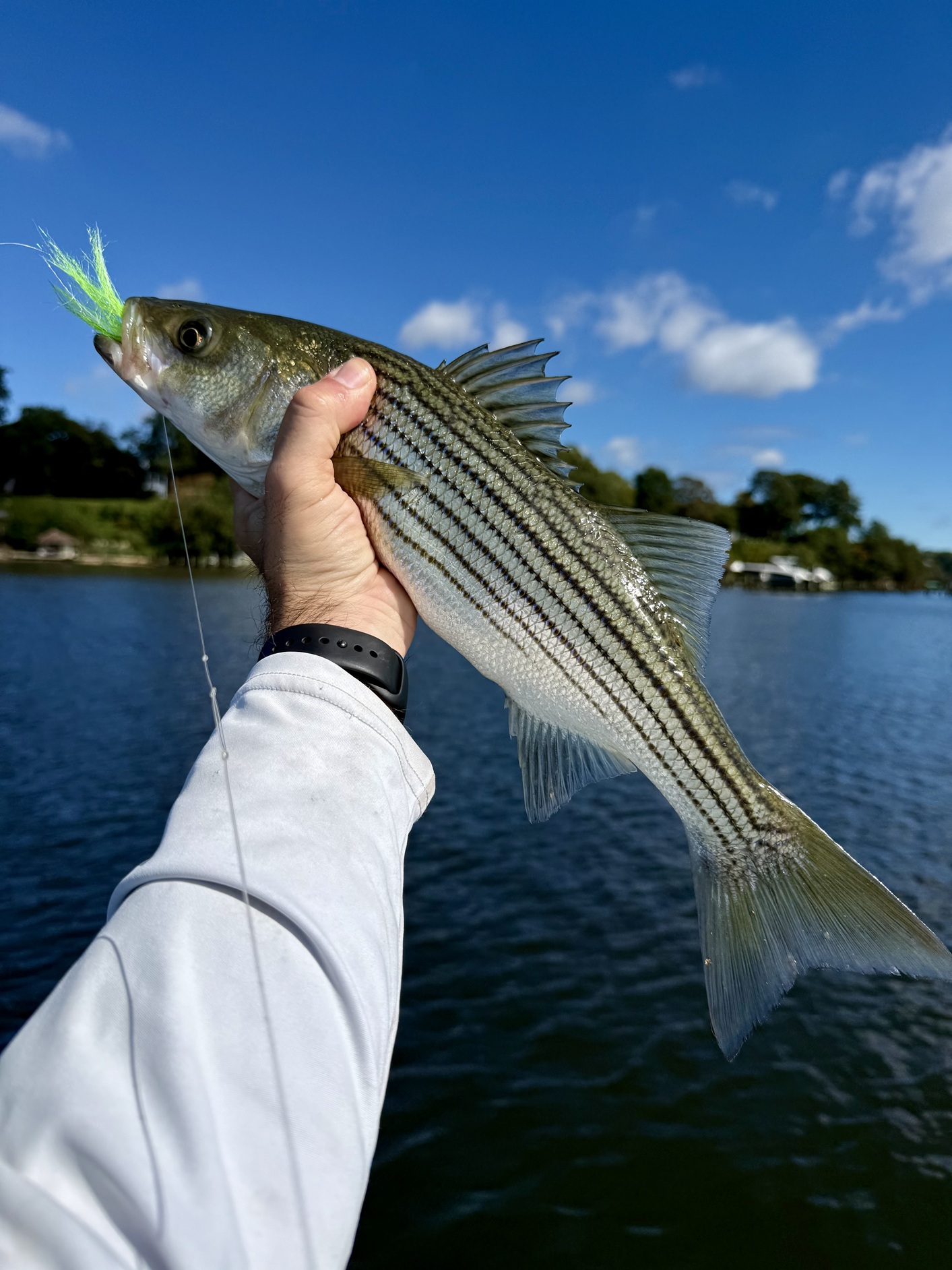
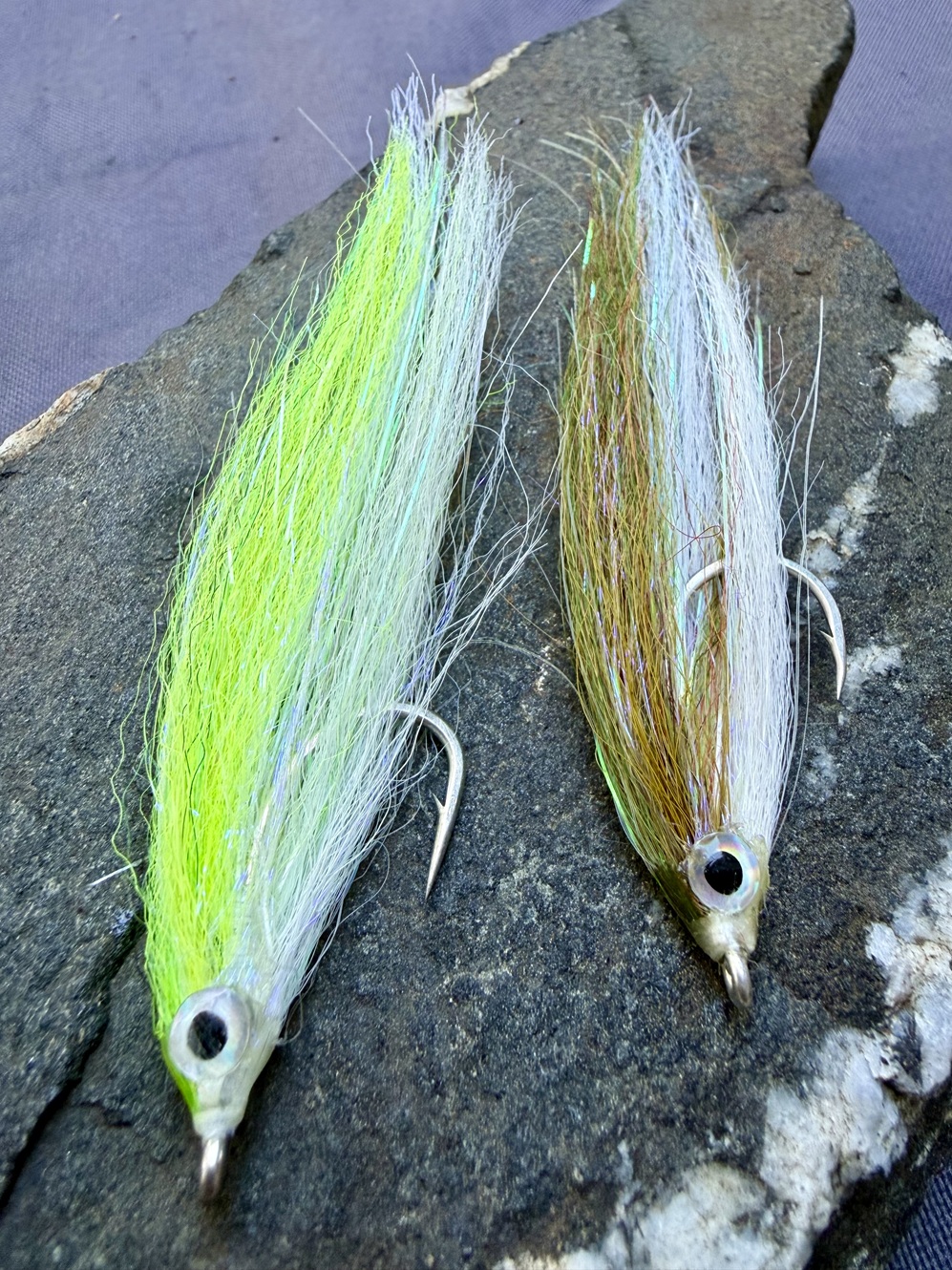
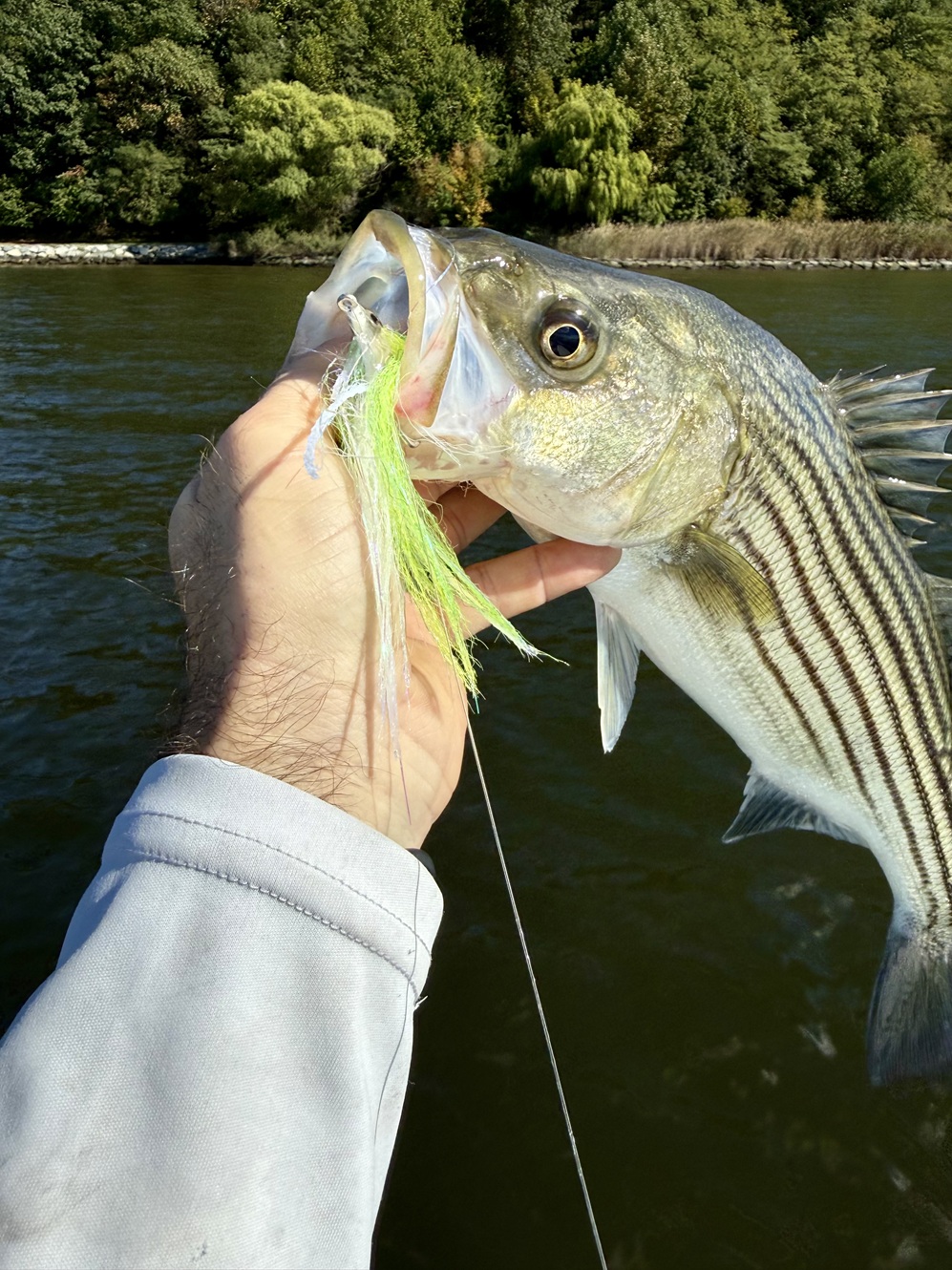
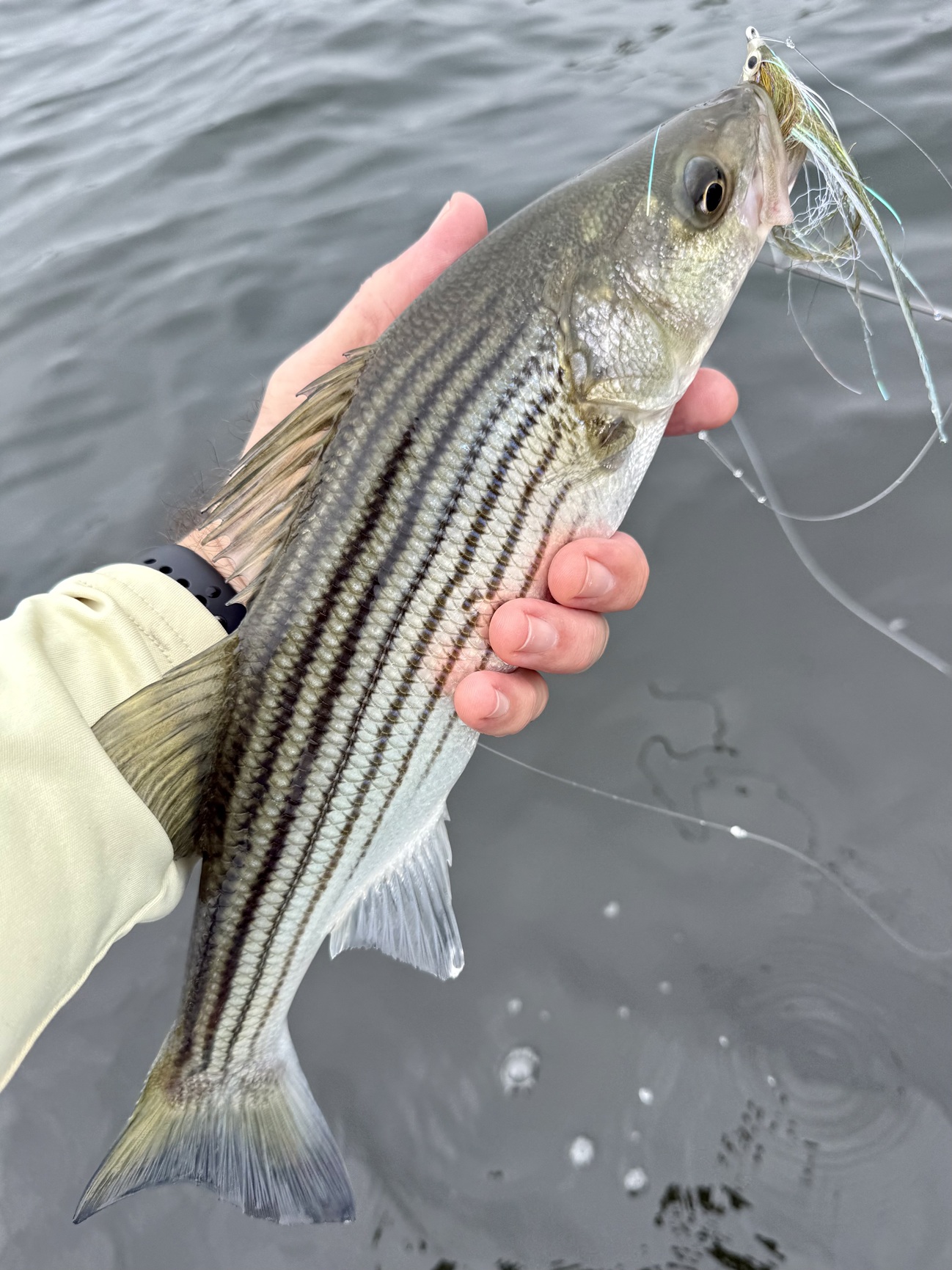
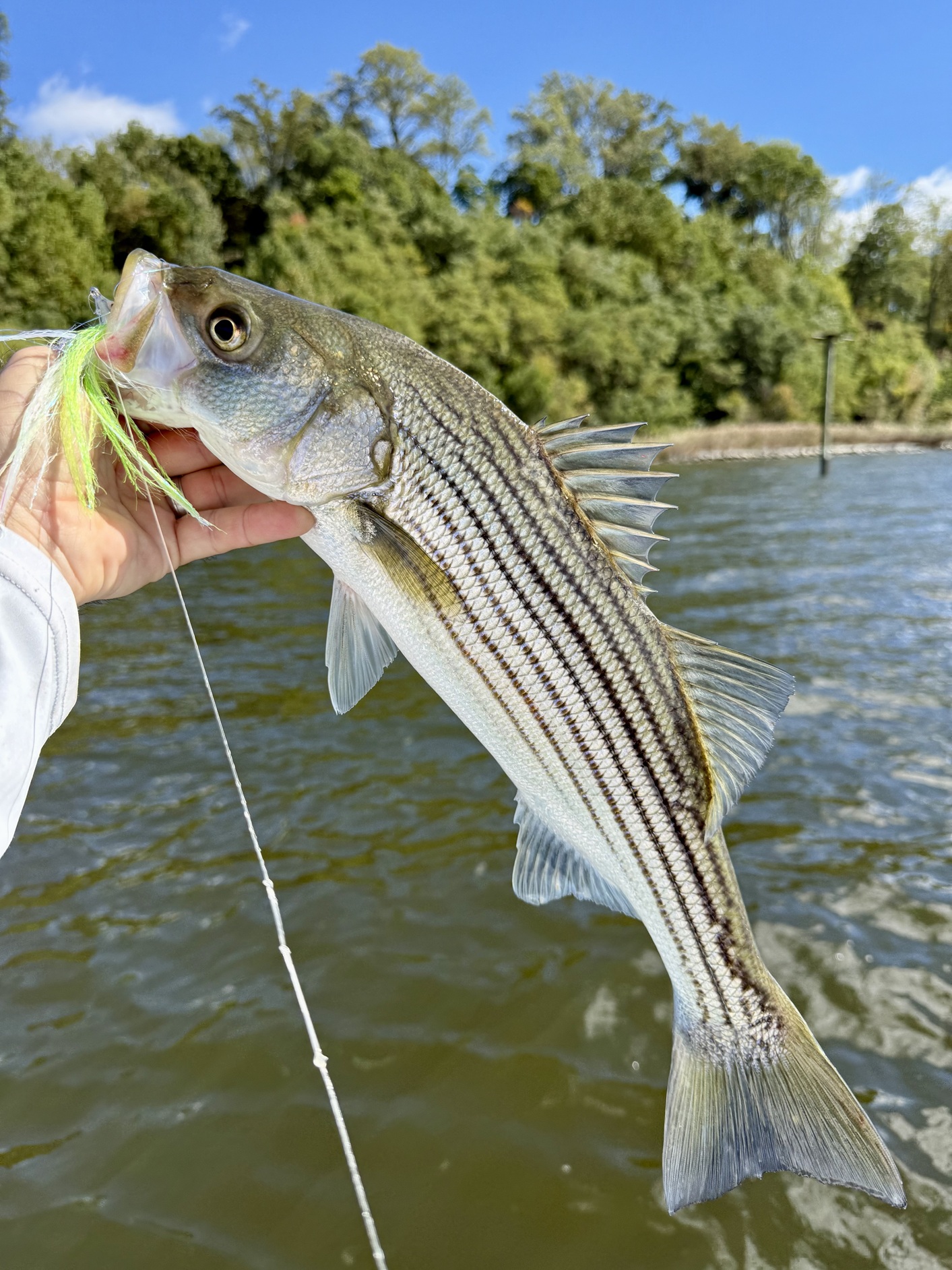
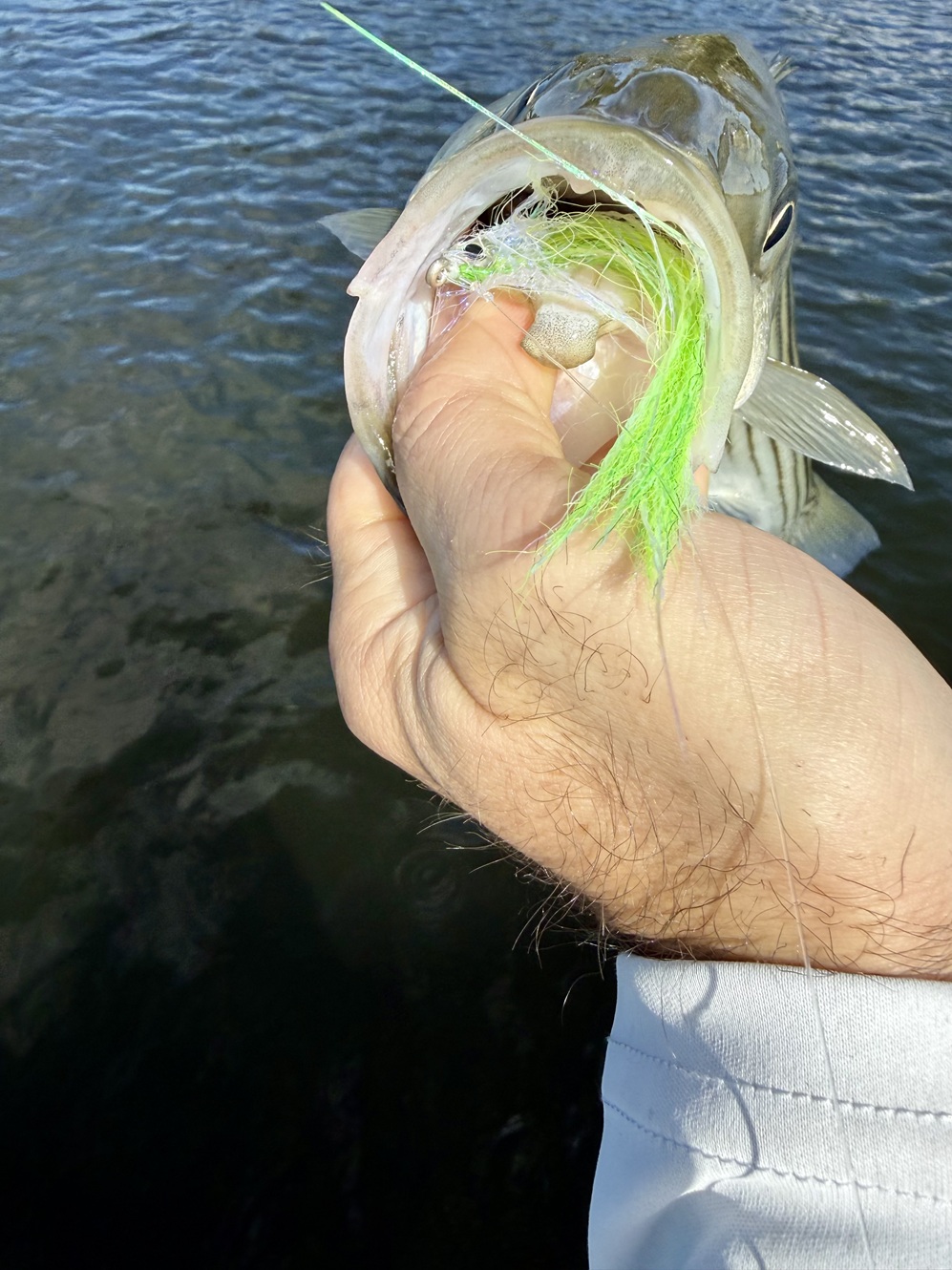
Back in the river, my decision to work the docks would pay off. Fly fishing with an 8w setup and intermediate line, I tied 4” bunker-style flies to the 5-foot fluorocarbon leader (tapered from 40 to 30 to 20 lb test). In the sunshine, the white/chartreuse colored fly caught fish. In lower light and cloudy skies, the white/brown color worked. Casts were methodical and turned over well around the docks, with short quick strips of the fly between 5 to 10 second pauses.
Between a pair of docks, an expansive flat drops off from 7 feet to about 20 somewhat sharply. This area held some bait and larger fish, and gave me the first schoolie striper on my first outing of the week. A nice-pulling 17-inch fish. After the activity waned, I zipped the boat over to another stretch of shoreline dotted with docks, the farthest right of which is the most sizable and marks the junction with another lengthy flat that grows a lot of submerged grass in the summertime. As a junction, it always has the potential to hold fish.
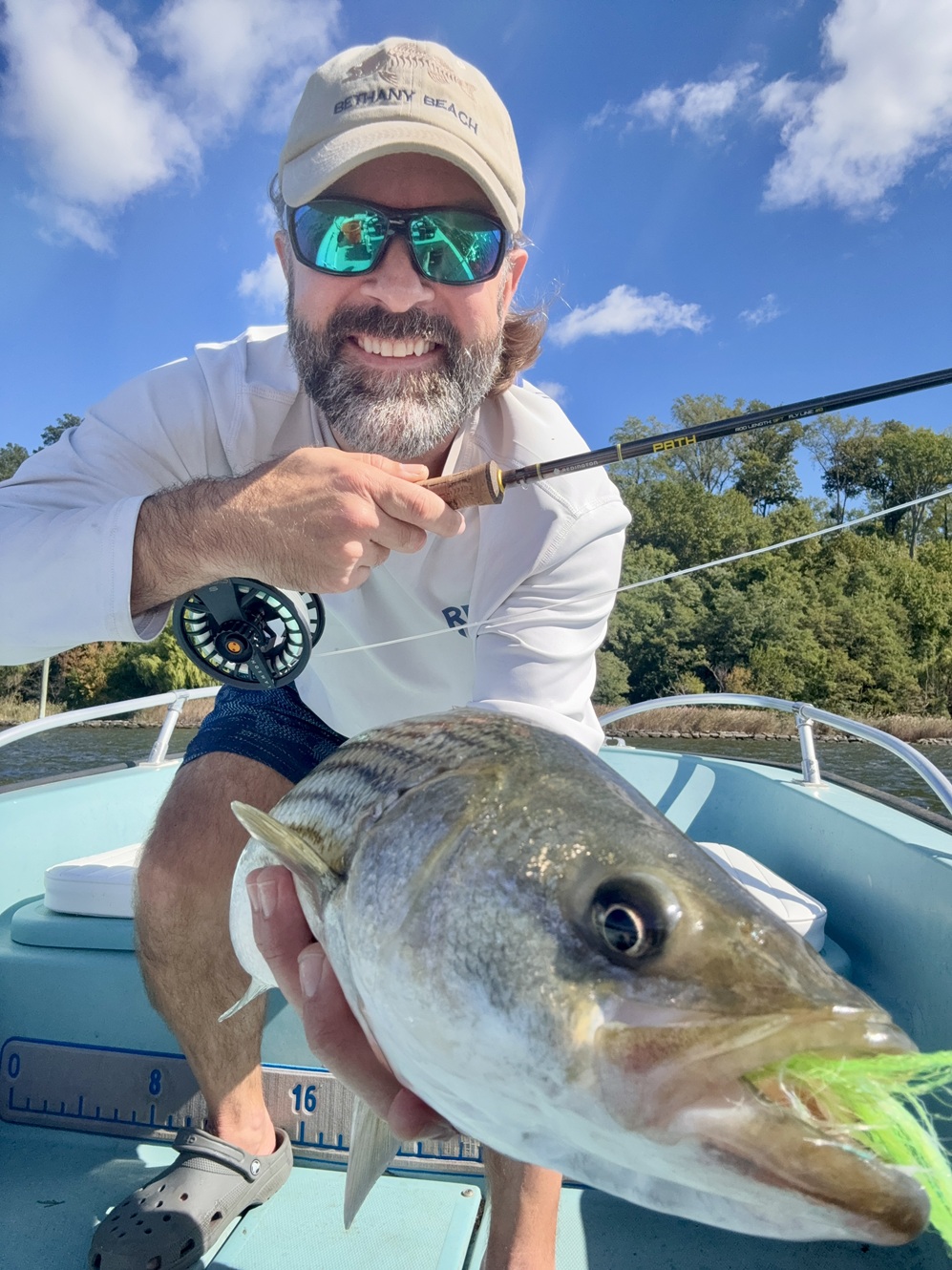
The tricky part of fishing this spot on this day was its windward position. With the northwest wind blowing up to 15 knots into the dock, I would repeatedly reposition the boat to catch a drift into the dock area, often forcing me to cast across and into the wind. Tough as that may have been, the good news is that this wind created the current that also pushed bait in and around the dock pilings. And, I believe striped bass positioned here to take advantage of this—the evidence was in the fish I caught. On three consecutive drifts and casts, I caught three fish: a 22 inch striper, followed by a 24” and a 20”.
During a late-week outing, my approach was similar. First, by casting around docks located along the, mostly, leeward side of the river with a light drift using the southwest wind. That didn’t pan out as hoped, so I switched gears and fished the completely windward shoreline on the opposite side of the river. Casting upwind and allowing the fly to drift down and with the wind-driven current moving back toward the docks paid off with a couple 16” feisty fish lying in wait. A good finish to this week’s fishing.
I will note that I spotted several bird blitzes over open water in Round Bay on this trip—moreso than earlier in the week. I did motor through the area when crossing the river and, although, birds would coalesce and swirl together, the fish below were split-second feeders and hardly worth chasing down or casting to. When water temps dip to 65F and just below, we should, hopefully, see the schools of fish enlarge and feed a bit longer on the surface when blitzing. Fingers crossed.
See y’all on the water again, real soon!
Disclaimer: includes Amazon Associate and non-sponsored company links. As an Amazon Associate, I earn from qualifying purchases.