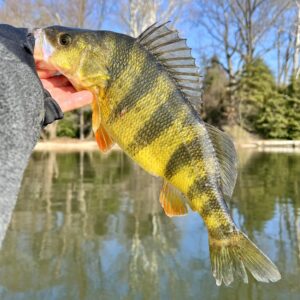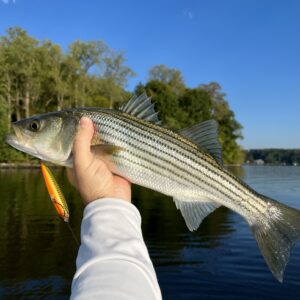
Water temps in the rivers and Chesapeake Bay are nearing the 65F sweet spot for schooling striped bass; as such, we tried an autumn pattern this week with high hopes
“We’re just a few degrees away from the fish schooling and feeding hard,” stated a renowned charter captain on his social media about striped bass in the Chesapeake Bay. Water temperatures are hovering around 68–69F. When we hit the 60–65F range, we should see the autumn patterns fully develop. I can’t wait. Truly.
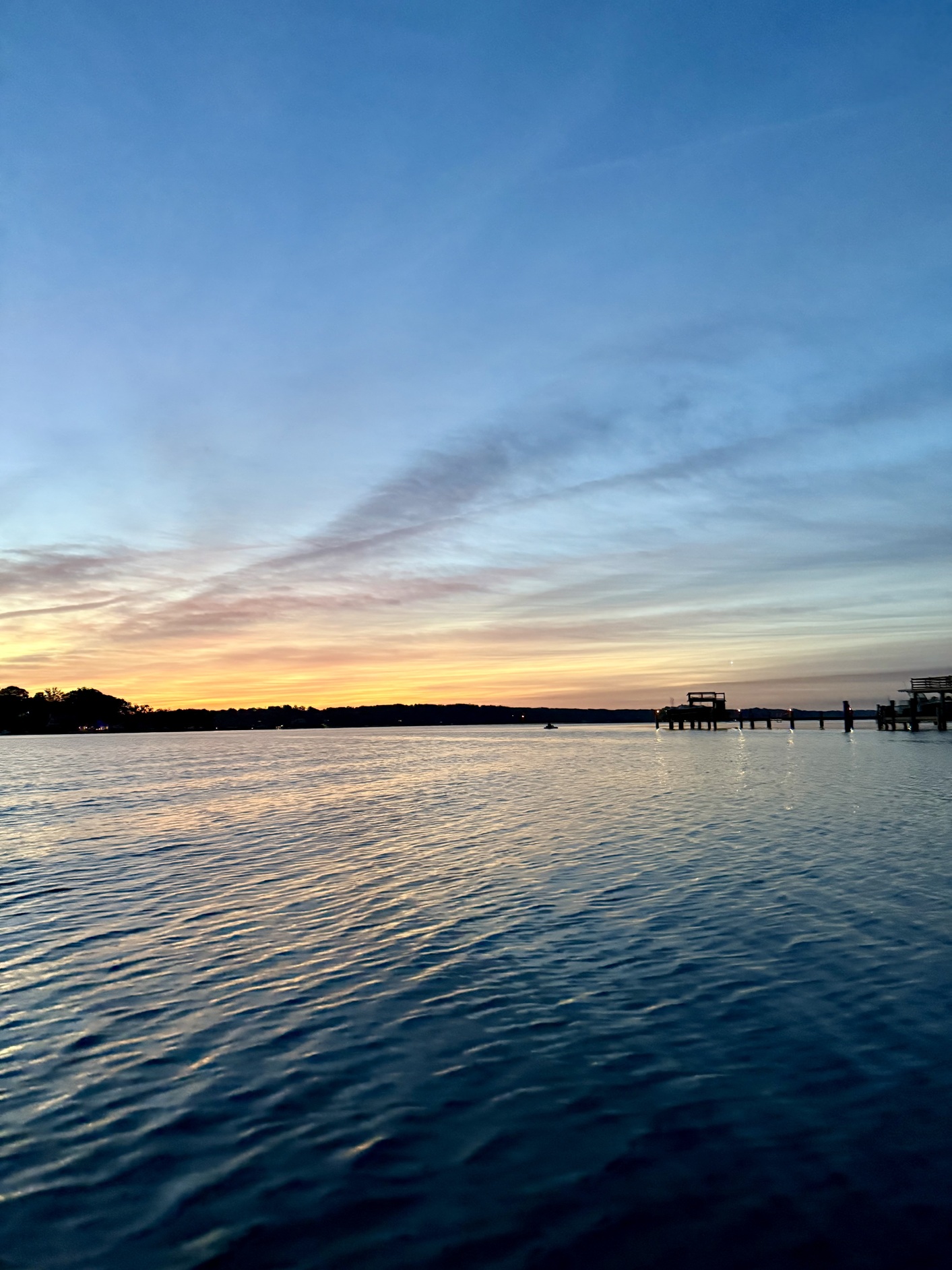
Because on a recent morning, I plied the water from 6:30 a.m. until just after noon, searching for a bite in the Severn River that never fully materialized in the way I expected or hoped. I motored far downriver to fish several areas between the two bridges that, with an outgoing “new moon tide” and gentle northwest breeze, I expected to hold striped bass feeding on bait flushing from creeks. Twas not to be, which left me searching several go-to spots back upriver. I resorted to fishing docks that jut from shallow 2–5’ flats into deep water that shoots down to 15–20’. It became a hard fishing day, but eventually, I enticed a few playful fish on the fly.
The big takeaways from this challenging morning were: (1) exploring some new spots is always a treat because, regardless of catching fish or not, I’m constantly learning the river; (2) every outing is an opportunity to dial in the 8w fly fishing setup I employ (and which flies are best suited for the weight-forward lines and leaders I use); and (3) sometimes, you have to turn to places over patterns.
That last item isn’t sage advice—you’ll more-often hear the saying “fish patterns, not places.” Theoretically, anglers should start their day fishing patterns that match the fish species to the season, tides, weather, moon phase, and habitat…versus directly navigating to spots and hoping the fish are there. Homework by means of matching a pattern to a place, can make for more fruitful outings. But this is no easy feat, of course. Fish behavior, like humans’, goes through all of life’s variables, attitudes, and adjustments. And just as suddenly as a bite turns on, it can turn off…sometimes defying logic and circumstance.
Case in point, my morning of fishing. I began my fishing by visiting three pre-selected areas that I believed could hold fish given the current conditions and seasonal fish behavior. The target was striped bass that could be feeding near creek mouths and adjacent submerged structures (like sandbar points, rock piles). Bait should have begun its migration from the creek arms of the river, moving out and downward toward the open Bay. Overall, it’s a pattern that’s prime to fish in October. Or should be, at least.
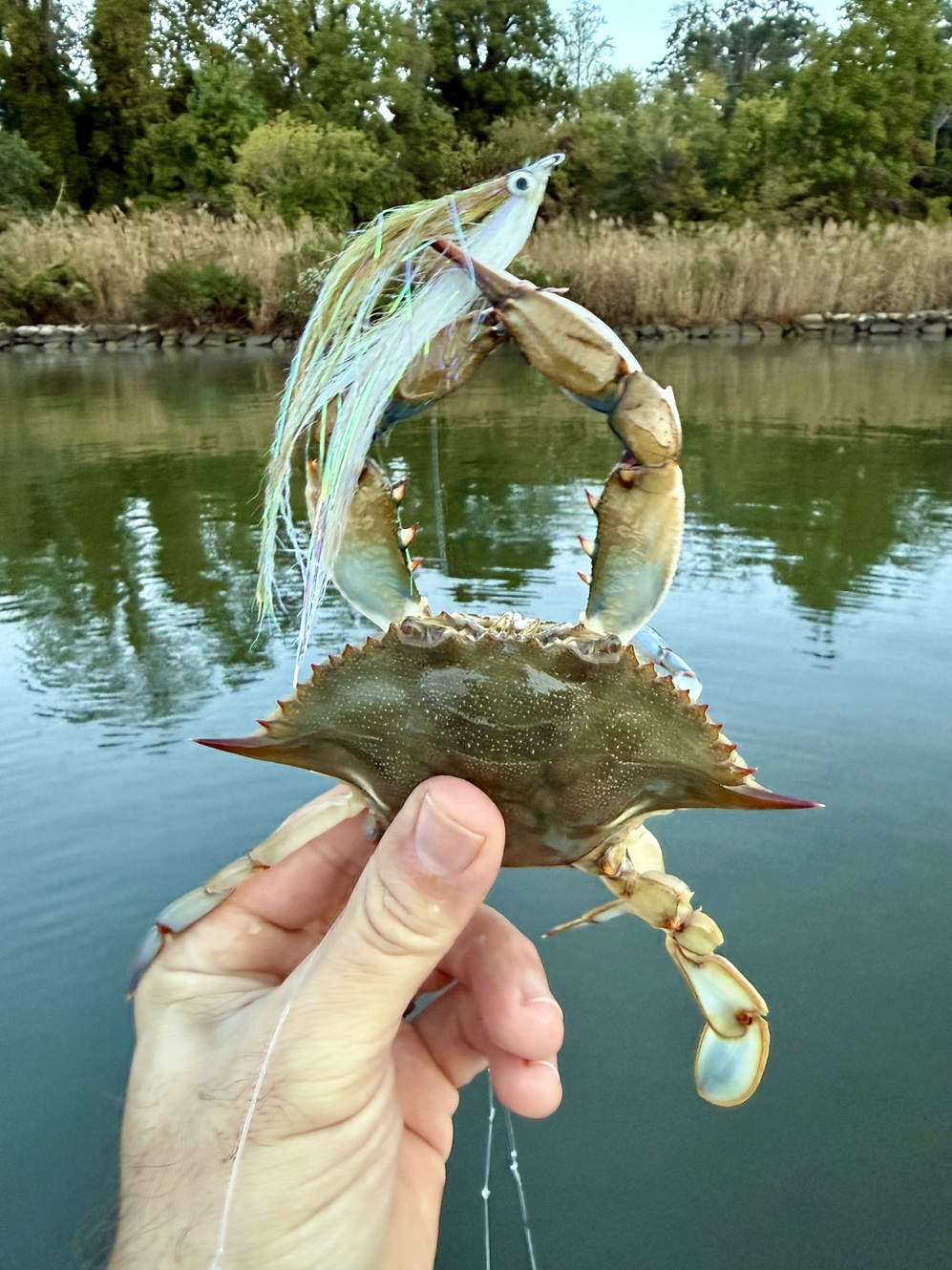
At each location, I stealthily approached with the trolling motor barely whispering through the water. The first spot was the mouth of a narrow passage between a creek and basin just off the wider river, with a rock jetty creating an ambush point. The second was a sandbar with a few small rockpiles in about 4’ of water. The third was another sandbar with a patchwork of rotting pilings adjacent to a 10-foot dropoff. All three were at creek mouths, and had the recipe for potentially holding and catching fish. At each spot, I casted a bunker-style fly to imitate the peanut bunker in the river—the fly pushes a bit more water than a deceiver, but casts just as gently, which I figured would be a good shallow-water searching fly. Despite careful positioning, satisfactory casting, and patience, I was unable to locate any striped bass in these areas (sidenote: a blue crab actually grabbed the fly).
This pattern was my big play to start the morning fishing. It was dawn, the conditions seemed favorable (although the tide wasn’t moving as strongly as anticipated), and pre-selected areas/depth/structure appeared accurate (satellite and nav-chart scouting matched what I saw on the river and sonar). But I never marked significant bait balls here. Nor larger fish. On the plus side, I liked the environs of each spot.
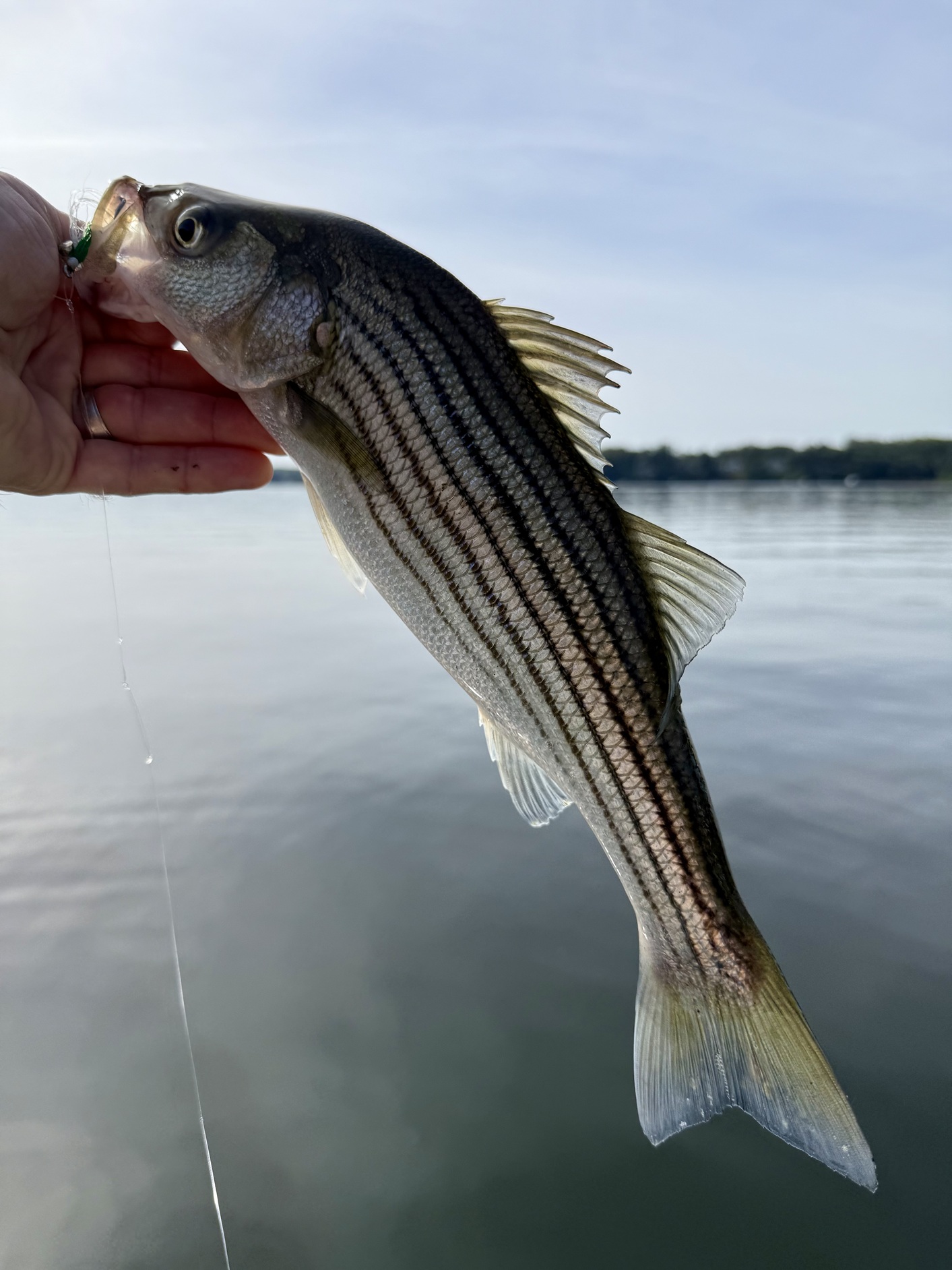
With the pattern not playing out, I moved back upriver to known hot-spots and favored locations to fish for whatever was willing to bite. Hopefully stripers in the >20” class range. There’s been more and more social media posts in the local angling circles about good fish being caught when trolling or casting soft plastics on jigheads or bucktails around docks and dropoffs. That’s long been another favorite fall pattern of mine. Especially during the late-morning hours when the sun is higher in the sky and the fish seek shade and/or deeper water. Could I get flies down deeper to match this style of fishing?
I tied on a Popovic’s Jiggy style fly. With its heavier jig-style head and slim deceiver-style body, it can sink into deeper water, perfect for the deep docks I aggressively fish. The trick is learning to adjust the fly cast with this much heavier fly (versus the lighter bunker-style fly I casted earlier). And it was tricky. So much so that I decided to switch to a Clouser, which offered a nice in-between option (not too heavy, not too light) for searching the water around the docks.
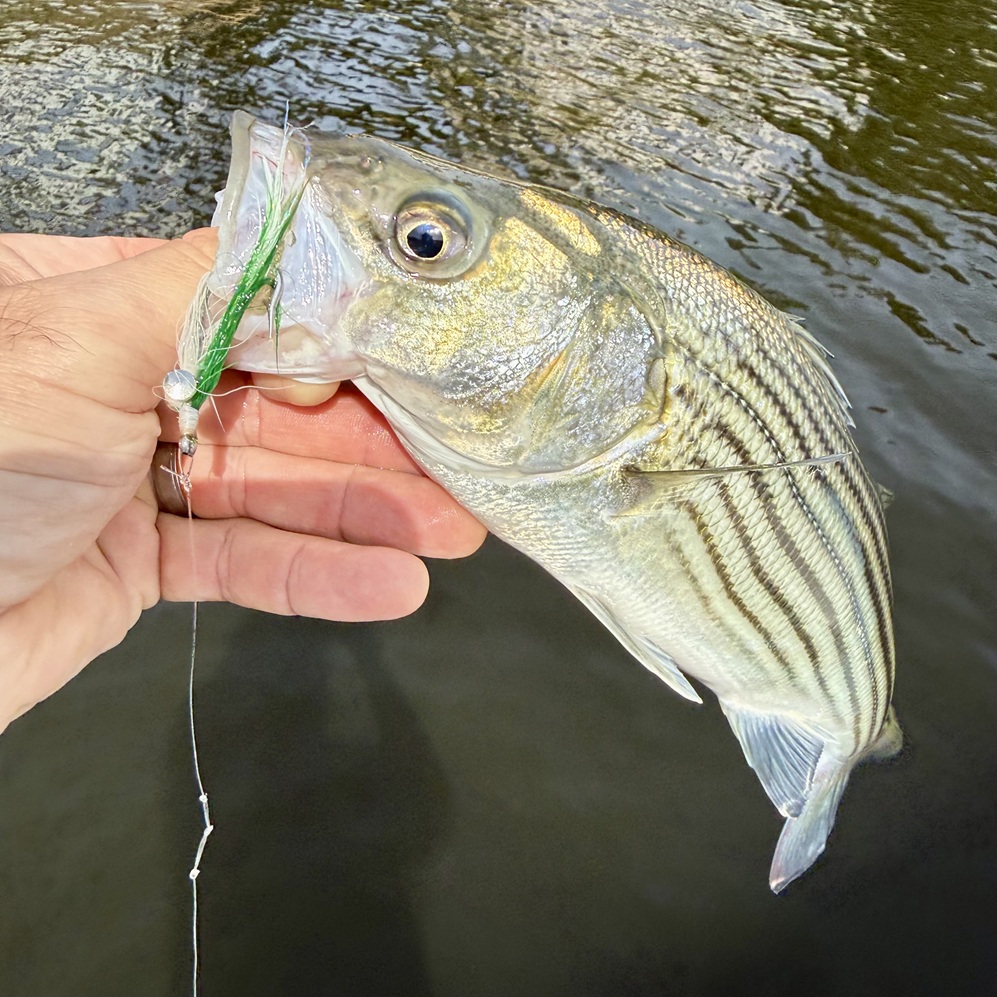
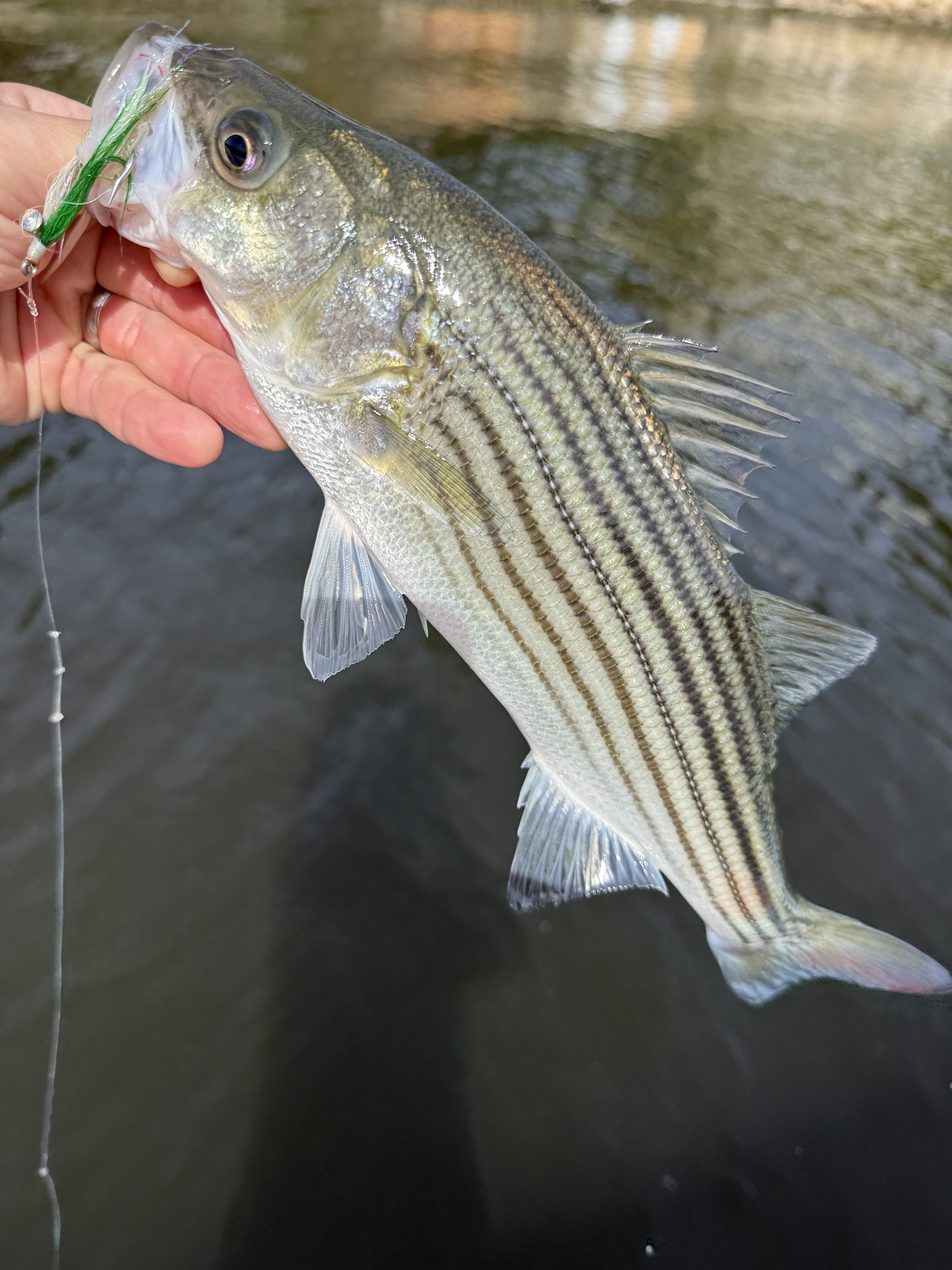
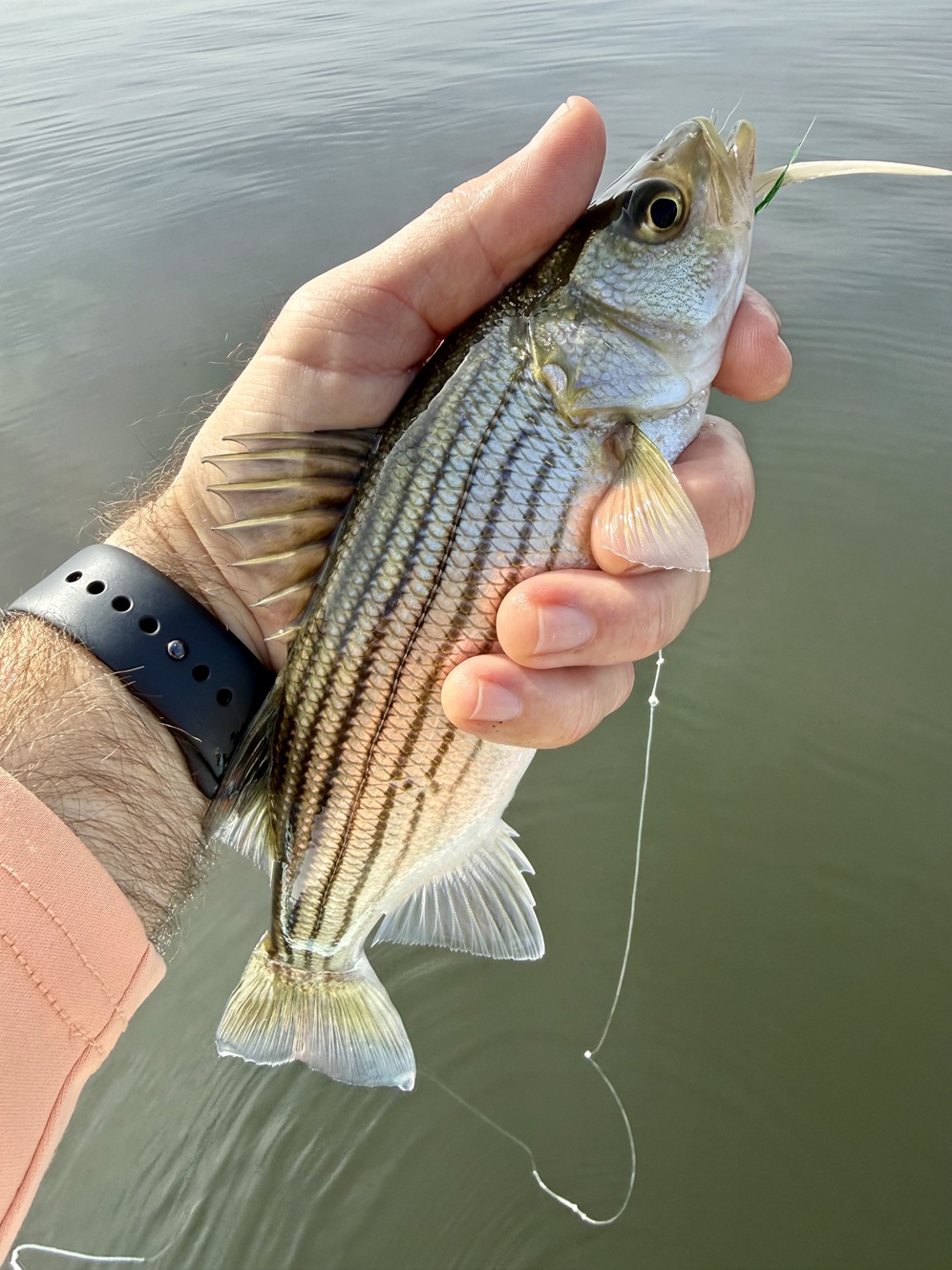
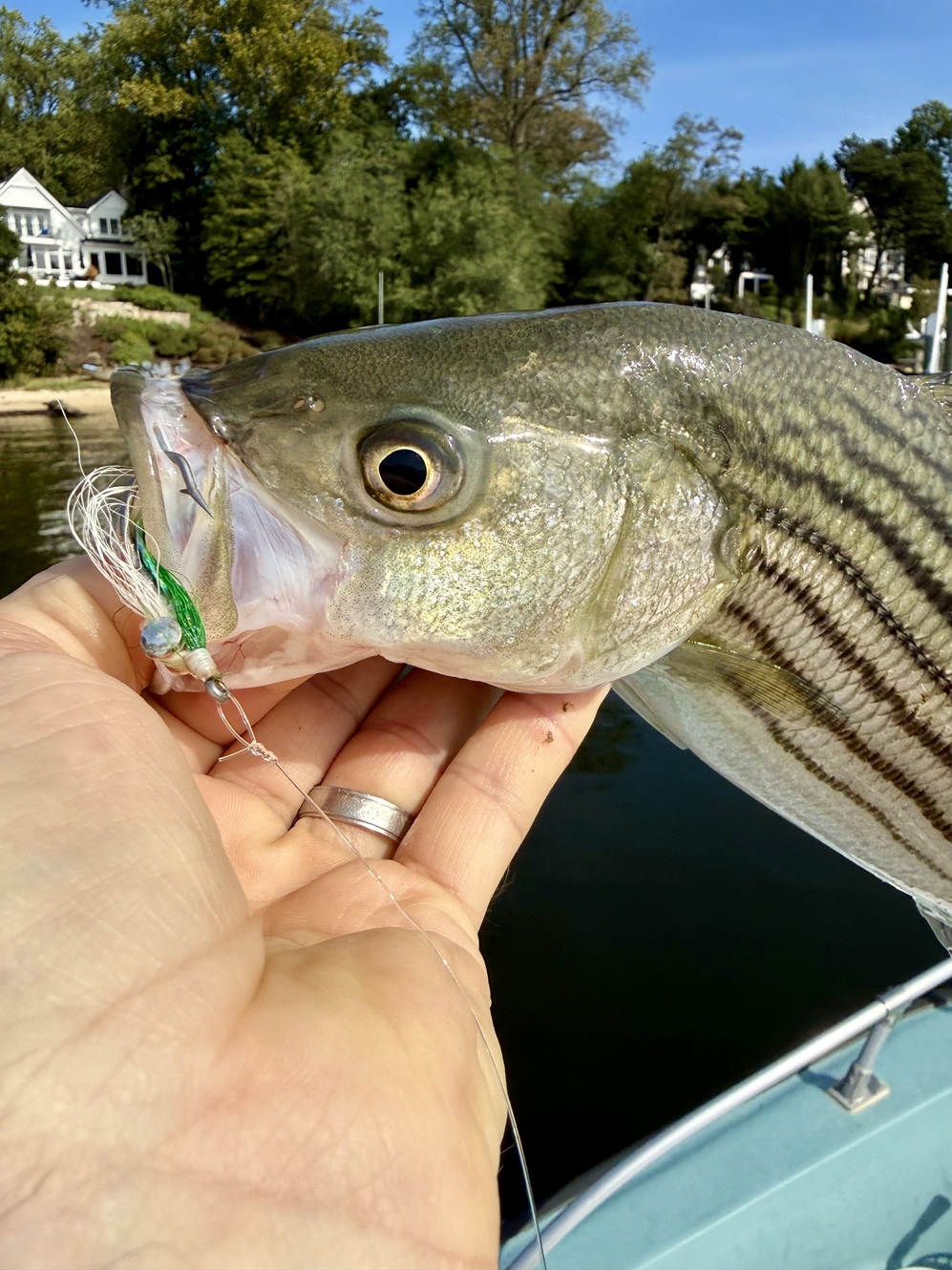
Working dock after dock along a few areas that I frequent often, produced several striped bass <15”. These were fun, little tugs, but nothing that required putting the fish on the reel. All in all, fishing the docks provided a reliable fall-back option to the early-morning attempts of fishing an autumn pattern at supposedly prime locations. Perhaps within a week or so, we’ll have water temperatures down a few more degrees and that will fire up the patterns we expect…and the good fishing we’re hoping for.
See y’all on the water again, real soon!
Disclaimer: includes Amazon Associate and non-sponsored company links. As an Amazon Associate, I earn from qualifying purchases.